
In Vivo Oncology Models
Tumor Models for Oncology and Immuno-Oncology
Selecting the right in vivo oncology model is critical for translating biological activity into meaningful efficacy data. WuXi Biology and Testing provides a broad portfolio of tumor models for oncology and immuno-oncology research, supporting small molecules, biologics, and immunotherapies across efficacy, mechanism-of-action, resistance, and translational studies.
Model selection can be tailored to tumor biology, therapeutic mechanism, immune context, disease site, and study endpoint. Available platforms include cell line-derived xenograft (CDX), patient-derived xenograft (PDX), syngeneic, orthotopic and metastatic, humanized immune-system, genetically engineered, and drug-resistant models, with molecular, immune, imaging, and pharmacodynamic readouts available to support candidate selection.
- A large collection of cell line-derived xenograft (CDX) tumor models covering over 30 tumor types
- Imaging-based orthotopic/metastatic CDX platform, covering 15 tumor types
- Patient-derived xenograft (PDX) tumor models covering 28 cancer types and clinical drug-resistant models.
- Syngeneic tumor models covering 20 cancer types, enabled with immunotherapy SOC, TIL analysis, and other immune profiling.
- Humanized models with hPBMC/HSC reconstitution or immune checkpoints humanization
- In vivo models of tumor complications
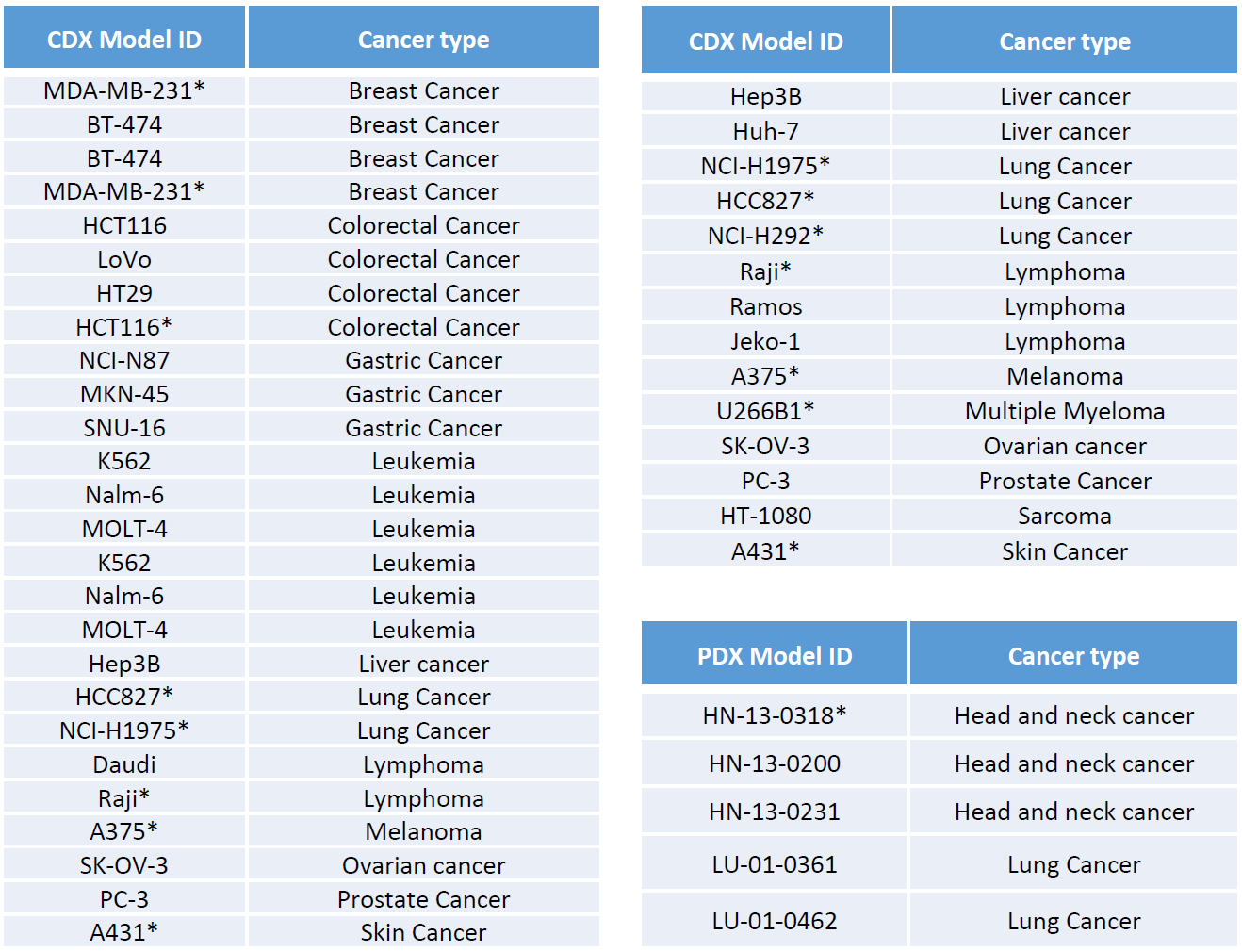
Cell Line-Derived Xenograft (CDX) Tumor Models
CDX models provide a well-established and scalable approach for in vivo efficacy testing using characterized cancer cell lines. Subcutaneous models support efficient tumor-growth and dose-response studies, while orthotopic and metastatic models can better represent tumor microenvironment, and disease dissemination when these features are important to the therapeutic hypothesis.
- Over 445 CDX models established in rodents
- Available data of sensitivities to SOC (standard of care)
- Imaging-based orthotopic/metastatic tumor models
- Brain/bone metastasis models of various cancer types
* Indicates model validated with SOC compound in the tables below.
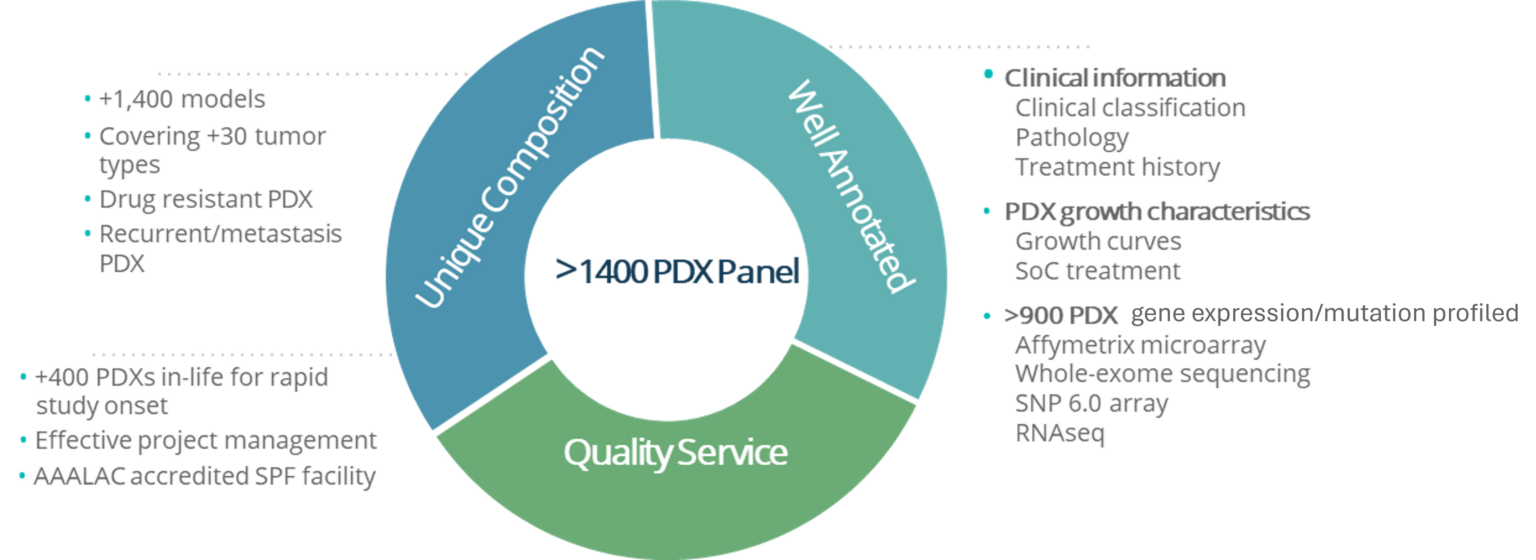
Patient-Derived Xenograft (PDX) Tumor Models
PDX models preserve important histologic and molecular features of patient tumors and can support studies requiring greater tumor heterogeneity and translational relevance. Model characterization and prior pharmacology data can help match tumor type, treatment history, and therapeutic mechanism to the study question.
- 1,400+ PDX models covering a full range of cancer types
- Fully characterized models with pharmacological profiling
- Drug-resistant models, including clinical acquired resistant models
- In vitro screening and derivative PDXC/PDXO models
- PDX panels for mouse clinical trials
Syngeneic Tumor Models
Syngeneic tumor models maintain an intact host immune system and are particularly useful for evaluating immunotherapies, combination strategies, and tumor-immune interactions. Orthotopic options, immune-checkpoint inhibitor response data, and immune profiling can help connect antitumor efficacy with changes in the tumor microenvironment.
- 90+ Syngeneic models (mouse, rat, hamster) covering 20 cancer types
- Comprehensive panel of orthotopic syngeneic tumor models
- Responsiveness to immune checkpoint inhibitors (PD-1, PD-L1, CTLA-4, etc.)
- Tumor-infiltrating leukocytes (TILs) map

Engineered Tumor Models
Engineered tumor models enable focused evaluation of defined oncogenic drivers, resistance mutations, and humanized immuno-oncology targets. These models are important when therapeutic activity depends on a specific molecular alteration or target expression profile.
- 90+ engineered cell lines based on construct overexpression or gene knock-in (KI)
- Pharmacologically validated both in vitro and in vivo
- Focusing on drug-resistant mutation introduction and IO-related checkpoint humanization
- Example targets: EGFR, AR, ER, ALK, RET, FLT3, BTK, Claudin18.2, PD-L1
Humanized Immuno-Oncology Models
hPBMC Humanized Models
- Established models for immune-checkpoint inhibitor and bi-specific antibody candidates in a human-resembling immune system.
- Annotation for both immune cells (phenotyping, biomarkers, functions) and tumor cells (expression, mutation)
- Different PBMC delivery systems (systemic injection or co-inoculation with tumor)
HSC Humanized Models
- Available humanized models from CIEA, combined with our PDX/CDX models
- Customizable with human cytokine transgenic mice (GM-CSF/hIL-3 or hIL-2) to improve the reconstitution of myeloid lineage
Human Immune Checkpoint Gene KI Mouse Models
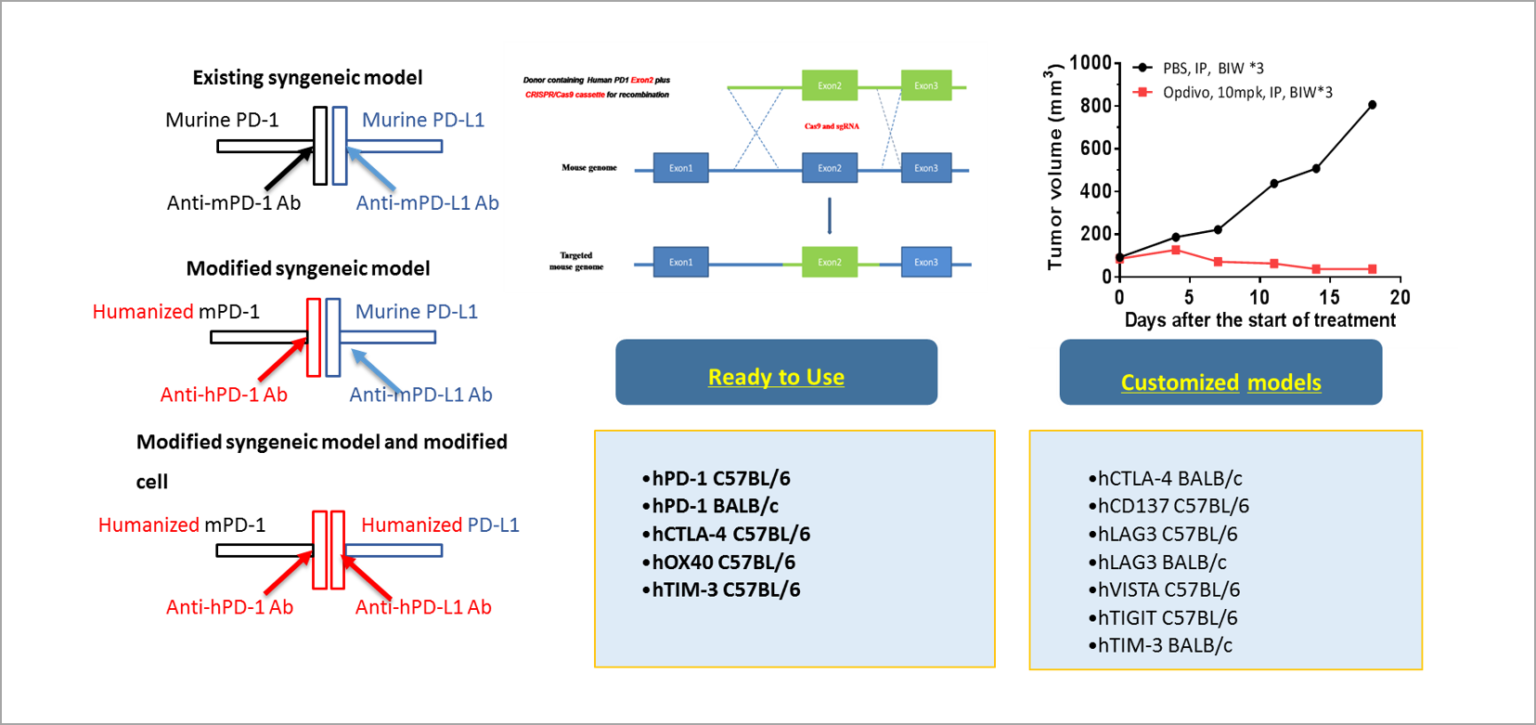
KI (Knock-in) mice offer the possibility to study clinical-grade checkpoint antibodies targeting human checkpoints in the context of a fully functional immune system. We offer efficacy studies across different mouse strains with human target KI in mice and cell lines, as well as comprehensive flow cytometry to evaluate target expression and immune function.
- Collection of various targets and background mouse strains
- Validated with launched or most advanced clinical-grade checkpoint antibodies
- Double checkpoint KI mice customizable for combination (PD1 + OX40, PD1 + TIM3)
Immuno-Avatar Humanized Models
Immuno-avatar models combine human tumors with human immune-cell reconstitution to increase translational relevance for immuno-oncology programs. Multiple humanization strategies can be selected according to the immune lineages, tumor model, and therapeutic mechanism that need to be represented.
- Mouse models harboring human tumor and human immune cells
- HSC (CD34+) avatar and next-generation immune avatar for multiple-lineage engraftment (Myeloid, NK, DC)
Drug-Resistant Models
Drug-resistant tumor models can support the investigation of acquired and intrinsic resistance mechanisms, the evaluation of next-generation therapies, and the development of combination strategies to overcome treatment resistance. Available platforms include engineered and experimentally acquired resistant CDX and PDX models, as well as models characterized for specific oncogenic drivers and resistance-associated alterations.
- Engineered and acquired drug-resistant CDX and PDX models
- Intrinsically resistant PDX models
- Models representing clinically relevant resistance mechanisms and oncogenic drivers
- Supporting pharmacology data for evaluation of next-generation agents and combination strategies

Explore Solutions for Your Program
Explore solutions by development phase, drug modality, therapeutic area, or integrated discovery needs.
You May Also Be Interested In


Get a Quote
Ready to plan your next study? Share your program needs with our team for a tailored estimate.