
DMPK Services
Integrated DMPK services from early discovery through development, including in vitro ADME, in vivo PK, MetID, and modeling.
DMPK Strategy from Discovery to Development
DMPK connects compound design, exposure, pharmacology, and safety by defining how a drug is absorbed, distributed, metabolized, and eliminated. Early, fit-for-purpose ADME and PK studies can identify liabilities and help rank compounds during hit-to-lead and lead optimization. As candidates advance, mechanistic DDI, metabolite identification, radiolabeled ADME, bioanalysis, and PK/PD modeling can support candidate selection, IND-enabling strategy, and later development. Our scientists integrate these data across stages to help teams make phase-appropriate, evidence-based decisions.
DMPK by the Numbers
Years of DMPK Experience
DMPK/ADME Employees
Global DMPK Clients
Successful IND Filings Supported
In Vitro Studies/year
In Vivo Studies/year
Core DMPK Services
Explore integrated DMPK capabilities spanning in vitro ADME, in vivo pharmacokinetics, metabolite identification, radiolabeled ADME, and PK/PD modeling.
In Vitro ADME
Profile absorption, distribution, metabolism, DDI, and developability early.
Learn More
In Vivo Pharmacokinetics
Define exposure, bioavailability, tissue distribution, and PK across species.
Learn More
Metabolite Profiling and MetID
Identify metabolic pathways, soft spots, and metabolites relevant to safety.
Learn More
Radiolabeled ADME
Quantify mass balance, tissue distribution, and metabolic disposition.
Learn More
PK/PD Modeling
Link exposure and response to support dose selection and translation.
Learn More
Integrated Drug Metabolism & Pharmacokinetics
Discovery DMPK helps define developability, rank compounds, and guide chemistry using physicochemical, in vitro ADME, and screening PK data. During lead optimization and candidate selection, in vivo PK, bioanalysis, PK/PD, and mechanistic metabolism studies connect exposure with efficacy and safety. IND-enabling and later development may require phase-appropriate DDI assessment, metabolite profiling and identification, MIST, mass balance, tissue distribution, radiolabeled ADME, and human PK projection. Studies can be designed as stand-alone or integrated with biology, pharmacology, bioanalysis, and safety assessment.
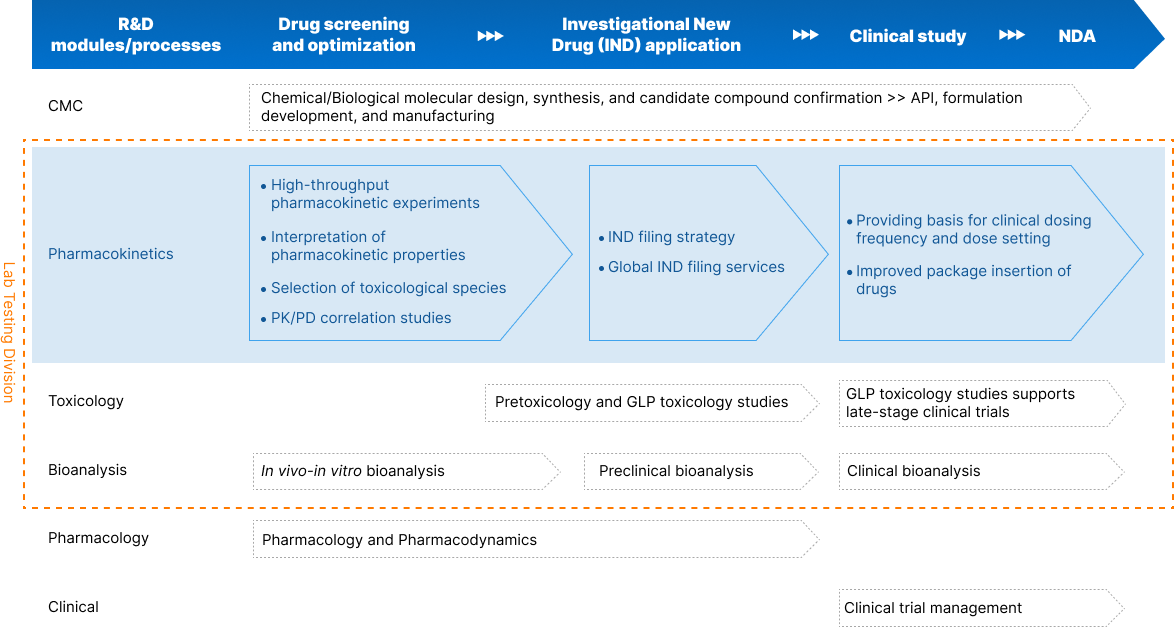
From DMPK Data to Development Decisions
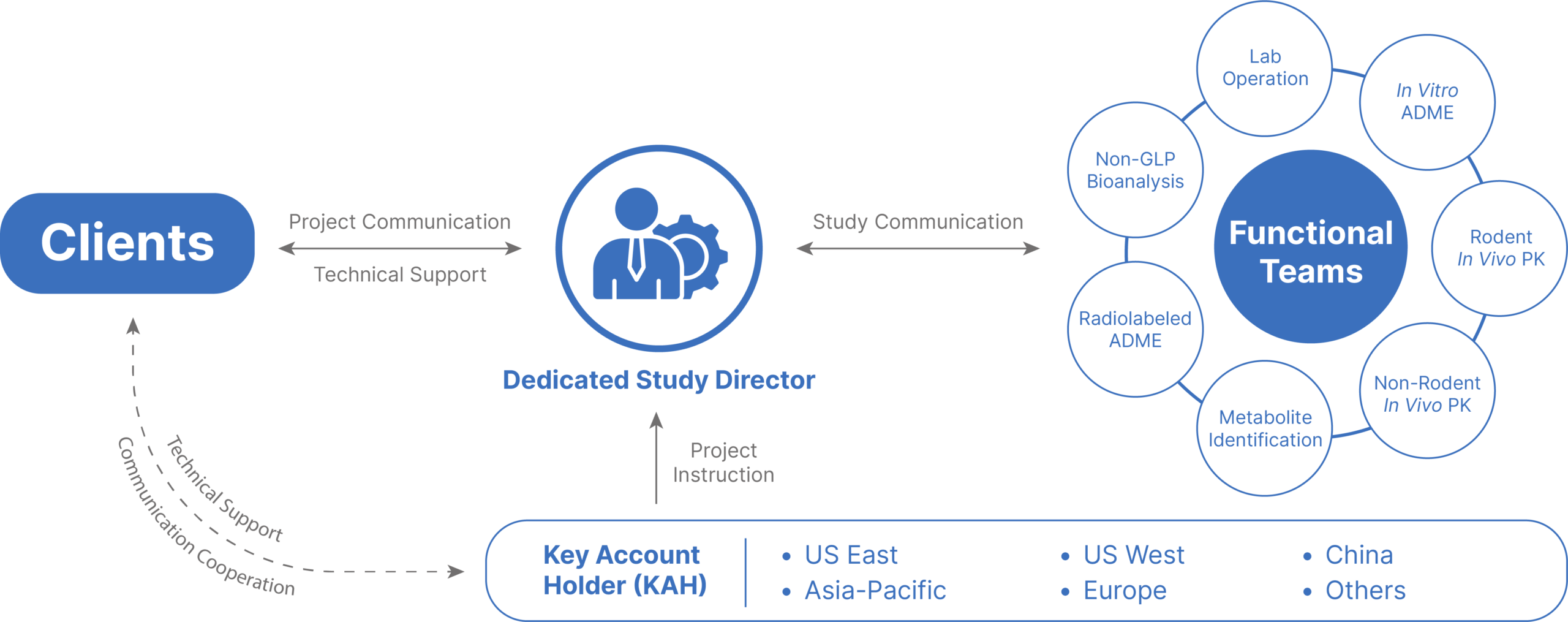
WuXi Biology and Testing’s DMPK services range from expert in vitro ADME and in vivo PK to full-scale digital lab operations and management. This integrated view can help identify liabilities earlier, refine study design, select appropriate species and dosing strategies, and build a more coherent evidence package for development decisions.
Scalable DMPK Automation
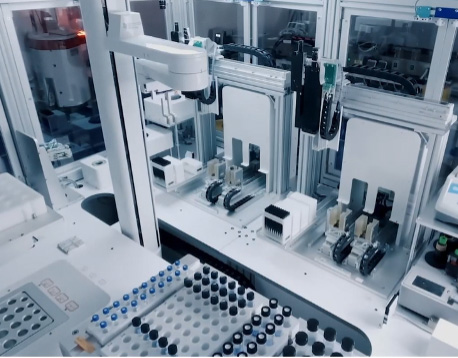
Automation in compound management, in vitro ADME testing, and bioanalytic sample pretreatment streamlines complex workflows, enabling faster and more efficient processes. By utilizing advanced robotic platforms, we enhance data quality, reduce variability, and lower operational costs, significantly accelerating turnaround times. This empowers our clients to make confident, data-driven decisions, and expedite their drug candidates' journey to market.
- Smart compound management and library workflows
- Automated in vitro ADME workstations
- Automated bioanalytical sample-preparation workflows
DMPK Strategies Across Molecular Modalities
DMPK questions change with molecular size, mechanism, route, and analytical needs. Our teams adapt study design and bioanalysis for small molecules and emerging modalities, integrating considerations of disposition, metabolism, tissue exposure, and PK/PD as appropriate.
- Small molecules, including covalent drugs
- Targeted protein degraders (including PROTACs)
- Oligonucleotides
- Antibody-Drug Conjugates (ADC)
- Peptide-Drug Conjugates
- Peptides
- mRNA
- Antibodies and multispecific antibodies
- New delivery systems
- Other emerging modalities
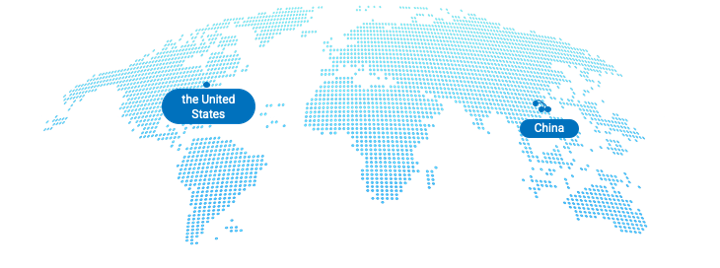
Our DMPK/ADME Network
Access coordinated DMPK capabilities across five R&D sites in the United States and China, including New Jersey, Shanghai, Suzhou, Nanjing, and Nantong. The network supports discovery screening, preclinical development, and selected clinical DMPK activities, with capabilities spanning in vitro ADME, in vivo PK, MetID, radiolabeled ADME, and bioanalysis. Cross-site coordination can support both stand-alone studies and integrated projects.
Why WuXi Biology and Testing for DMPK Studies?
Integrated DMPK capabilities connect discovery, preclinical, and selected clinical studies across a global network. Flexible study design, modality-specific expertise, automation, and cross-functional collaboration help generate decision-relevant data as projects advance.
Discovery-to-Development Continuity
- Early screening through IND-enabling and later development
- In vitro ADME, in vivo PK, MetID, radiolabeled ADME, and PK/PD modeling
- Stand-alone studies or integrated DMPK projects
Integrated Scientific Strategy
- Study design aligned to development stage, modality, and scientific question
- Cross-functional collaboration with biology, pharmacology, bioanalysis, and safety
- Data interpretation in the context of project decisions
Modality-Ready DMPK
- Small molecules and emerging modalities
- Modality-appropriate bioanalysis and disposition strategies
- Support for peptides, oligonucleotides, conjugates, mRNA, degraders, and biologics
Automation & Data Quality
- Automated in vitro ADME and sample-preparation workflows
- Standardized, scalable execution with traceable data handling
State-of-the-Art Instruments & Facilities
- AAALAC accredited & OLAW compliant
- Compliant with US regulatory agencies, EMA, EPA, NMPA, and DEA
- State-of-the-art bioanalytical instruments
Reliable Experimental Results
- Meet IND and NDA requirements of US regulatory agencies, NMPA, and EMA with 15+ years of surveillance/audit
- 150+ NMPA inspections
Frequently Asked Questions
DMPK stands for drug metabolism and pharmacokinetics and describes how drug disposition determines exposure over time. ADME refers specifically to absorption, distribution, metabolism, and excretion; DMPK integrates ADME with pharmacokinetic interpretation, bioanalysis, and related modeling to support drug discovery and development decisions.
DMPK is most useful when introduced early and applied iteratively. During hit-to-lead and lead optimization, physicochemical profiling, permeability, protein binding, metabolic stability, DDI screening, and exploratory PK can identify liabilities and guide compound design. As projects advance, studies become more mechanistic and development-focused.
Study needs depend on modality and development plan. Still, common elements include in vitro ADME and DDI assessment, rodent and non-rodent PK, bioanalysis, metabolite profiling and identification, MIST, PK/PD analysis, and radiolabeled mass balance or tissue distribution when appropriate. The sequence should be aligned with the questions that must be resolved before regulatory submission and first-in-human development.
In vivo PK defines systemic and tissue exposure, bioavailability, clearance, and half-life across relevant species. PK/PD analysis links exposure with pharmacologic response, helping interpret efficacy studies, compare candidates, inform dose selection, and support translation between preclinical models and later development.
Yes, our DMPK/ADME facilities are compliant with the US regulatory agencies, European Medicines Agency (EMA), Environmental Protection Agency (EPA), and National Medical Products Administration (NMPA). They are also fully accredited by the Association for Assessment and Accreditation of Laboratory Animal Care (AAALAC) and compliant with the Office of Laboratory Animal Welfare (OLAW) Assurance to Conduct Public Health Service (PHS)-funded studies.
Search our site for services, solutions, expertise, and resources.
Discuss Your Program
Share your goals and challenges with our experts.