
Genetic Toxicology Testing Services
Supporting Success Through Genetic Toxicology Testing
Genetic toxicology testing plays a critical role in evaluating whether a drug candidate has the potential to damage DNA or chromosomes, helping sponsors identify genotoxic risk early in development. These studies provide essential data to support candidate selection, regulatory submissions, and informed decision-making throughout the nonclinical development process.
WuXi Biology and Testing offer comprehensive genetic toxicology testing services, from early screening assays through GLP-compliant regulatory studies. Our experienced scientists design and execute studies in accordance with ICH S2(R1), OECD, FDA, EMA, and other global regulatory guidelines, delivering high-quality data to support IND-enabling programs and worldwide submissions.
Genetic Toxicology Expertise
Years of Genetic Toxicology Experience
Safety Assessment Staff
Safety Assessment Studies Conducted/Year
Comprehensive Genetic Toxicology Testing Capabilities
WuXi Biology and Testing provide a comprehensive portfolio of genetic toxicology assays designed to support drug discovery, lead optimization, and regulatory development. Our scientists tailor testing strategies based on your molecule type, development stage, and regulatory objectives.
Our capabilities include:
- Early genetic toxicology screening
- Bacterial reverse mutation (Ames) assays
- In vitro micronucleus assays
- Mammalian chromosome damage assays
- (Q)SAR mutagenicity assessments
- In vivo genotoxicity studies
- Mechanistic follow-up testing
- GLP-compliant regulatory genetic toxicology studies
By integrating scientific expertise with regulatory knowledge, we help sponsors generate reliable data to support confident development decisions while meeting global regulatory requirements.
From Exposure to Genotoxic Responses
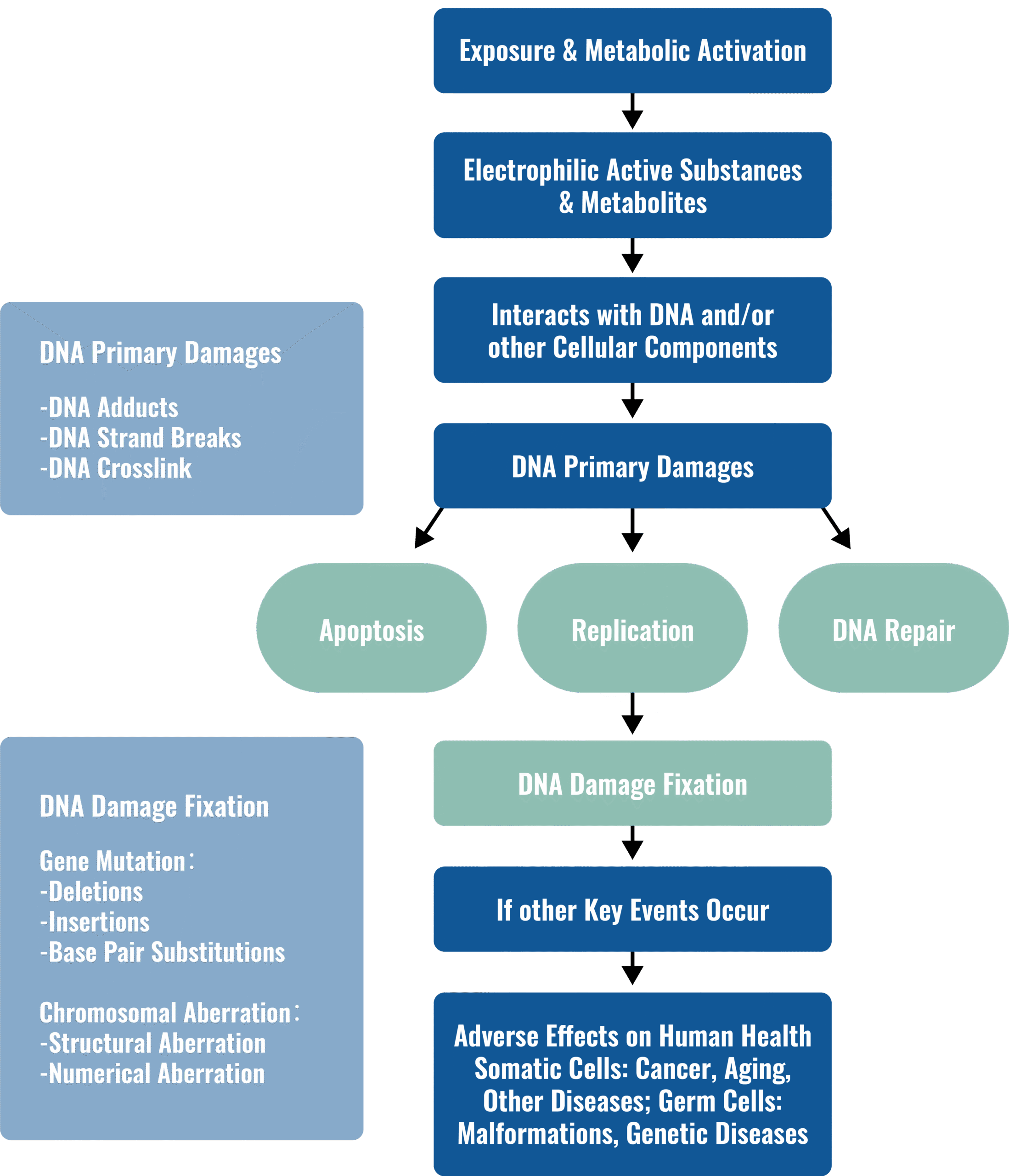
Genetic Toxicology Screening Battery
A standard genetic toxicology screening battery includes screening bacterial reverse mutation assays (Ames), and screening in vitro micronucleus assays. WuXi Biology and Testing offer (Q)SAR mutagenicity prediction for drug discovery and impurities as well.
Bacterial Reverse Mutation Assays (Ames)
Bacterial reverse mutation assays (commonly known as Ames) is a widely accepted first-line assay for evaluating mutagenic potential. Using multiple bacterial strains with and without metabolic activation, the assay detects gene mutations that may indicate a compound's ability to damage genetic material.
The Ames assay is commonly used to:
- Evaluate mutagenic potential during lead optimization
- Support candidate selection
- Fulfill regulatory genetic toxicology requirements
- Inform overall safety assessment strategies
WuXi Biology and Testing offer two formats for Ames assays:
Agar format
- Micro-Ames assay, 24-well plate
- Mini-Ames assay, 6-well plate
- Ames assay, petri dish
Liquid format
- Ames II
- Ames microplate format (MPF)

Screening Micronucleus Assay
The in vitro micronucleus assay identifies substances that induce clastogenicity or aneugenicity. Clastogenicty is a structural chromosomal aberration through breaks in DNA. Aneugenicity is a numerical chromosomal aberration through interactions with non-DNA cellular targets. WuXi Biology and Testing deploy the following methods:
- CHO Microwell MNT, manual method
- MicroFlow, flow cytometer method
(Q)SAR Mutagenicity Prediction
The International Conference on Harmonization (ICH) M7 guidelines for assessing and controlling DNA-reactive (mutagenic) impurities in pharmaceuticals allow for the consideration of in silico predictions in place of in vitro studies. This represents a significant advance in the acceptance of Quantitative Structure-active Relationship (Q)SAR models.
The QSAR mutagenicity prediction is an in silico tool for predicting the mutagenicity of compounds, impurities, and metabolites. Mutagenicity is the potential for a test article to cause genetic mutations. For impurity evaluation and drug discovery, WuXi Biology and Testing use:
- An expert rule-based model, Leadscope Model Applier
- A statistical model, Leadscope Model Applier
Genetic Toxicology GLP Battery
IND-enabling testing routinely includes a series of toxicology studies, including genetic toxicology. A standard GLP battery for genetic toxicology includes an Ames assay, in vitro mammalian cell assay, in vivo genotox assay, and mechanism exploration and follow-up assays.
Ames Assay
Ames (bacterial reverse mutation assays) identifies substances that induce gene mutations. WuXi Biology and Testing’s GLP Ames methods include:
- Plate incorporation
- Pre-incubation
- Treat and wash to avoid feeding effect
- Enhanced Ames for N-nitrosamines
In Vitro Mammalian Cell Assay
Mammalian cell assays evaluate whether a chemical substance has the potential to cause genetic damage to mammalian cells. These assays include:
- In vitro chromosomal aberration
- In vitro micronucleus (TK6 or CHO)
- Mouse lymphoma assay (MLA)
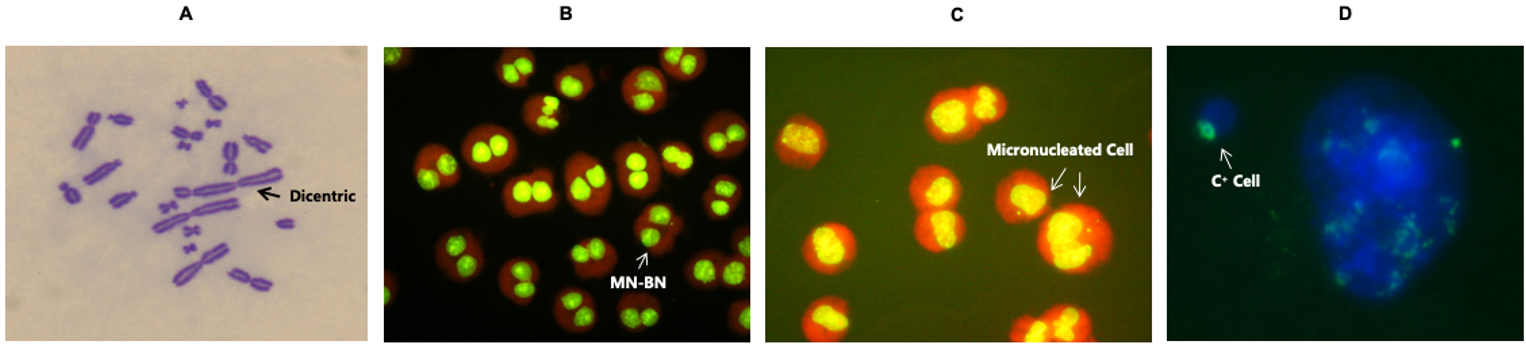
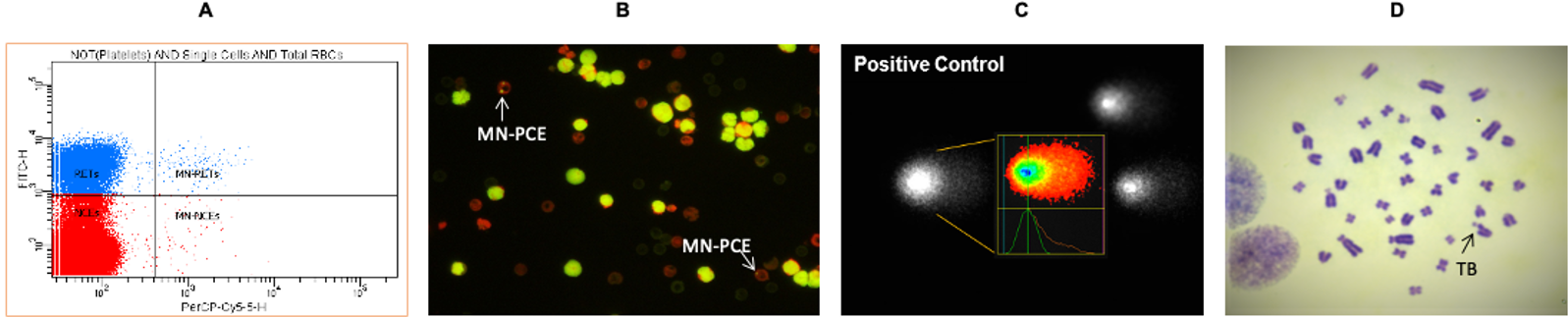
In Vivo Genotox Assay
- In vivo genotoxicity assays evaluate the potential of substances to cause genetic damage
- In vivo micronucleus (manually or FCM based method, standalone or integrated)
- In vivo Comet, option 2
Mechanism Exploration & Follow-Up Assays
WuXi Biology and Testing offer a series of additional genetic toxicology assays that complement the standard battery of GLP in vitro and in vivo assays, providing additional insights into how test articles might impact human DNA.
- In vivo chromosomal aberration
- In vivo Comet (standalone or integrated)
- In vivo Pig-a
- Fluorescence in situ hybridization (FISH)

Explore Solutions for Your Program
Explore solutions by development phase, drug modality, therapeutic area, or integrated discovery needs.
You May Also Be Interested In




Get a Quote
Ready to plan your next study? Share your program needs with our team for a tailored estimate.
Frequently Asked Questions
It's crucial for identifying potential genotoxic risks, which can lead to serious health issues such as cancer and genetic diseases. Ensuring the safety of substances before they are widely used protects public health and meets regulatory requirements.
It's crucial for identifying potential genotoxic risks, which can lead to serious health issues such as cancer and genetic diseases. Ensuring the safety of substances before they are widely used protects public health and meets regulatory requirements.
Key methods include the Ames test, chromosomal aberration test, and micronucleus test. Each method evaluates different aspects of genotoxicity to provide a comprehensive safety profile.
The Ames test detects mutations in bacteria caused by chemical substances, indicating potential genotoxicity. It is a widely used and accepted method for initial genotoxicity screening.
This test measures chromosomal damage by counting micronuclei in cultured cells/rodents, which indicate genotoxic effects. It is valuable for assessing both clastogenic and aneugenic effects of substances.
This test examines cells for structural changes in chromosomes, which can indicate genotoxicity. It helps identify substances that may cause cancer or heritable genetic defects.
It's typically conducted during early drug development and preclinical stages. Identifying potential genotoxic risks early helps avoid costly failures in later stages of development.
A GLP (Good Laboratory Practice) battery includes a series of standardized tests conducted under strict regulatory guidelines. These guidelines ensure the reliability, reproducibility, and integrity of test results.
It provides essential safety data required for IND filing, demonstrating that the drug is unlikely to cause genetic harm in humans. This data is critical for gaining regulatory approval to proceed with clinical trials.
Genetic toxicity can lead to mutations, cancer, and heritable genetic changes, posing serious health risks. Understanding and mitigating these risks is essential for developing safe pharmaceuticals and chemicals.
Early screening helps identify genotoxic risks early in the development process. This allows for modifications to the substance or development strategy, saving time and resources.
Regulatory guidelines are set by agencies like the FDA, EMA, and ICH. These guidelines ensure standardized and reliable testing methods that protect public health.
Consulting with experts and considering the substance's nature, intended use, and regulatory requirements can help select appropriate tests. Tailoring the testing strategy to the specific needs of the substance ensures comprehensive safety assessment.