
Central Nervous System & Pain Drug Discovery
Accelerating CNS & Pain Drug Discovery with Integrated Biology Solutions
Developing therapies for central nervous system (CNS) disorders and pain remains one of the most challenging areas of drug discovery. Complex disease biology, limited translational predictability, and high clinical attrition demand robust preclinical strategies that generate meaningful, decision-driving data.
WuXi Biology and Testing partners with biopharma companies to accelerate CNS and pain therapeutic development through integrated discovery biology services. Our multidisciplinary teams combine disease biology, in vitro pharmacology, electrophysiology, behavioral neuroscience, biomarker analysis, DMPK, and bioanalysis to support programs from target validation through preclinical candidate selection. Whether developing small molecules, biologics, oligonucleotides, peptides, or other emerging modalities, we deliver customized solutions designed to reduce development risk and advance promising therapies with confidence.
Integrated Discovery Expertise for Complex Neurological Diseases
Successful CNS drug discovery requires more than individual studies — it requires an integrated strategy that connects disease biology, pharmacology, translational science, and biomarker development. WuXi Biology and Testing brings together experts across multiple scientific disciplines to help sponsors efficiently evaluate therapeutic candidates while generating the data needed to make confident development decisions.
Our integrated platform supports every stage of discovery, from target identification and assay development through efficacy evaluation, PK/PD characterization, biomarker assessment, and candidate selection. By combining advanced technologies with deep neuroscience expertise, we help accelerate programs while reducing scientific and operational complexity.
Neuroscience Drug Discovery
The diversity of neurological disorders requires discovery platforms capable of addressing multiple mechanisms of action and therapeutic modalities. .WuXi Biology and Testing offers an innovative technology platform with integrated neuroscience capabilities to support research and development teams.
- Target Discovery & Validation
- Biomarker Discovery
- Neuroscience focused Hit ID & Lead Discovery
- In vivo Pharmacology & Disease Models
- Ex vivo, IHC, ADME, PK/PD, Safety
The CNS & Pain Discovery team provides customer oriented integrated services within our AAALAC accredited animal facility and world class laboratories including a GLP standard laboratory. We strive for highest data quality, consistency, and maximal efficiency.
Best-in-Class Capabilities
- Functional leaders with disease and/or program leadership experience
- Technical leaders with extensive bench experience
- Dedicated staff with a good training system
- International standard instrumentation and SOPs
- Multiple backups and new capacity expansion on-going
- Functionally diversified with validation of GPCR, Kinase and ion channel targets
- Broad spectrum of well-validated in vivo disease models
- Comprehensive battery of behavioral paradigms
- Advanced, high-throughput electrophysiology testing platform
New Modalities Capabilities
- AAV
- mRNA
- Oligonucleotide
- Cell therapy
- Antibody conjugated Peptide/Oligonucleotide
In Vitro CNS Platform Overview
Early-stage CNS discovery requires robust cellular models that capture target biology while supporting mechanism-of-action studies, hit characterization, and lead optimization. Our in vitro neuroscience platform combines disease-relevant in vitro and ex vivo systems with functional pharmacology assays to evaluate efficacy, target engagement, and neuronal function across multiple CNS targets.
- Assay development, screening and SAR support for GPCRs, transporters and ion channels
- Cell line development
- CNS-related GPCR binding and functional assays
- Microglia, astrocytes biology and functional assays
- Neuroprotective assessment in neurotoxin induced cytotoxicity assay using neuronal cell line, rodent primary neuron, or rodent primary glia
- Abeta, glutamate, glucose deprivation, OGD, LPS etc.
- Readout as cell viability, apoptosis, inflammatory gene expression etc.
- Evaluation of neurite outgrowth in differentiated PC12 or SH-SY5Y cell line or rodent primary neuron, neuronal iPSC-derived cells.
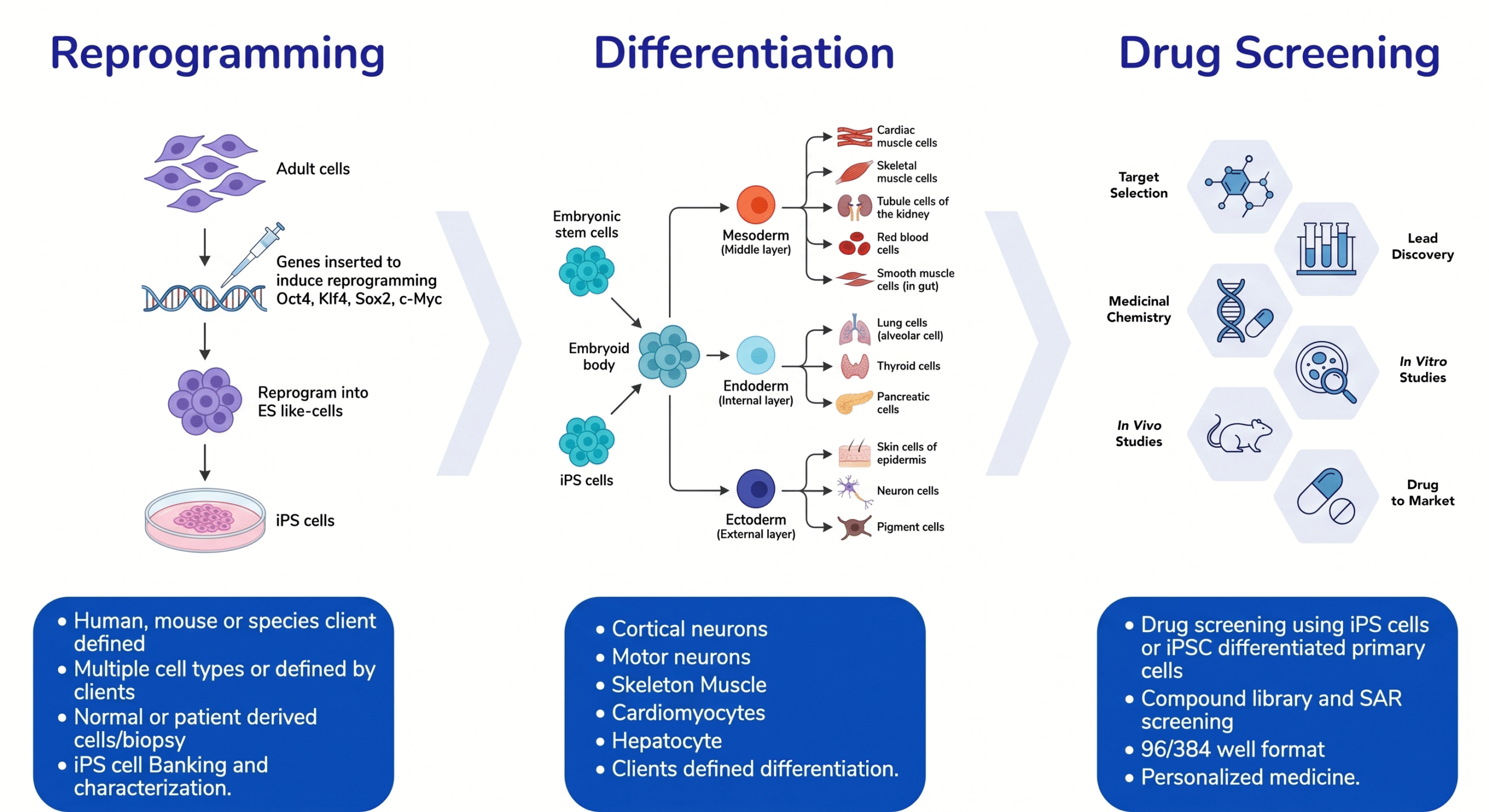
- Comprehensive iPSC platform: integrated capabilities and services including iPSC reprogramming, differentiation and drug screening.
- Target deconvolution using rodent brain tissue, neuronal cell line or rodent primary neuron etc.
- Organoid-based drug screening and toxicology studies
Neuroscience target-based assays
- Voltage and ligand Ion channels
- Over 50 stable cell lines
- Automated and manual patch-clamp assays
- Radioligand binding assays
- Transporters
- Uptake assays
- G-protein coupled receptors (GPCR)
- Over 120 stable cell lines
- Functional assay and binding assay
- Enzymes
- Strong expertise of enzymology in drug discovery
iPSC Capability
Human induced pluripotent stem cell (iPSC)-derived models provide disease-relevant cellular systems for studying neurological disorders, investigating disease biology, and evaluating therapeutic candidates. These models support target validation, phenotypic drug discovery, and functional assessment using human neuronal and glial cell types while complementing broader in vitro pharmacology capabilities.
Our integrated iPSC platform supports reprogramming, differentiation, and drug screening workflows for neuroscience research across multiple therapeutic applications.
Capabilities include:
- Differentiation into neuronal and glial cell types
- Neuronal and glial functional assays
- Neuroprotection and cytotoxicity assays
- Neurite outgrowth assays
- High-content phenotypic drug screening
- Target deconvolution studies
- Integration with electrophysiology and neuroscience pharmacology workflows
Electrophysiology
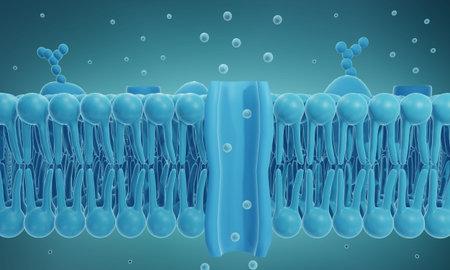
- Electrophysiological techniques provide direct functional evidence of neuronal activity and are increasingly used to bridge molecular pharmacology with translational neuroscience. These studies help characterize ion channel activity, synaptic transmission, circuit function, and drug mechanism of action.
- Automated patch clamp
- Manual patch clamp
- Brain slice electrophysiologyHigh-throughput ion channel profiling
- Ion channel targets expansion
- Stable cell lines:
- HERG-HEK
- 1-CHO
- P2RX7-CHO
- TRPV1-HEK
- Nav1.4-CHO
- Nav1.6-CHO
- Nav1.7-CHO
- Final constructs:
- Nav1.8
- nAChR
- 7-Ric3
- Stim1/Orai1
- Stim1/Orai3
- Kir3.1-3.4
- TRPV4
Learn more about our Ion Channel Screening Capability and Capacity
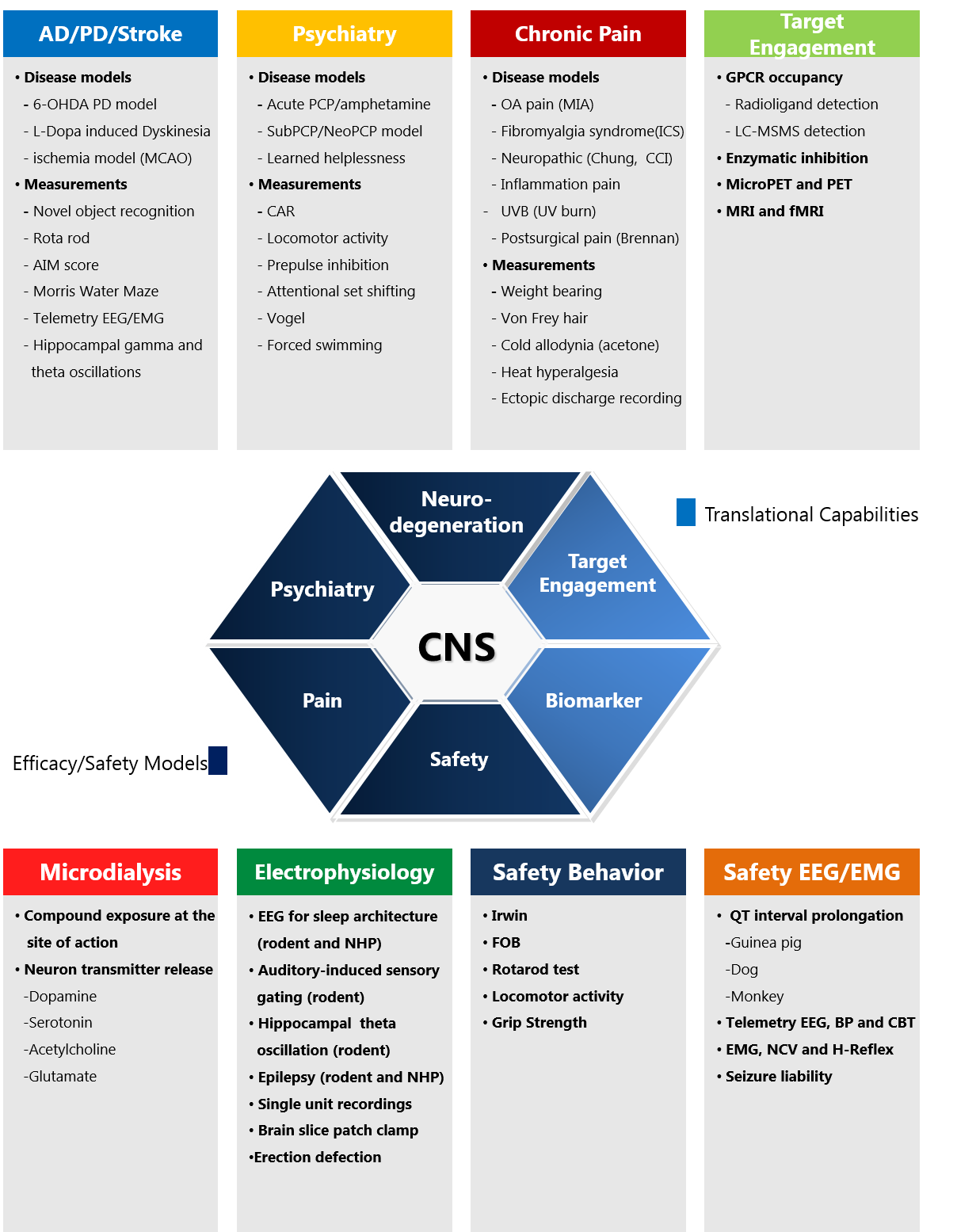
In Vivo CNS and Pain Studies
Animal models remain essential for understanding disease progression, evaluating efficacy, and establishing translational biomarkers in neurological disorders. Combining behavioral pharmacology with molecular and histopathological analyses provides a comprehensive assessment of therapeutic response and mechanism of action.
WuXi Biology and Testing offers strong capabilities with:
- Animal modeling from pharmacological and neurosurgical models to vector-based gene delivery, and of genetically modified (Humanization/knock-in/knock-out/transgenic)
- Featured CNS delivery solutions, including intracerebroventricular (ICV), intrathecal (IT), and intracisternal magna (ICM) injections, as well as stereotaxic intraparenchymal delivery etc.
- Comprehensive behavioral characterizations from general behavior, motor function, learning and memory, mood, pain behavior, to battery test-based disease-specific behaviors
- Full-scale molecular characterizations from gene/protein expression/profiling, epigenetic profiling and regulations, disease-specific biomarkers
- Comprehensive histological studies from cell death, brain morphometry, disease-specific hallmarks, various specific staining, neuronal loss/gliosis, to synaptic morphology
- Experienced Team: leaders and key personnel are returnees with strong expertise in CNS areas and rich experience in both academia and industry
- Mature Infrastructure
- AAALAC-accredited animal facility,
- Histological/morphological/imaging facility
- Behavioral core facility with statistics support
- Multiple cell culture rooms for in vitro, ex vivo studies
- Bio-analytical labs (molecular biology, neurobiochemistry, LC-MS and others)
CNS Diseases Models
- Neurodegenerative Diseases
- Alzheimer’s Disease (AD)
- Parkinson’s Disease (PD)
- Amyotrophic lateral sclerosis (ALS)
- Psychiatric Models
- Anxiety
- Depression
- Schizophrenia
- Other Disease Models
- Multiple Sclerosis
- Epilepsy
- Stroke
- Aging Related Diseases
- Osteoporosis, etc.
- Pain
- Acute inflammatory pain
- Post surgery pain
- Chronic inflammatory pain
- Acute nociception
- Chronic neuropathic pain
- Fibromyalgia-like pain
- Osteoarthritis, etc.
- See More CNS Disease Models
Behavioral Models
- Experimental Psychiatric
- Anxiety-like behavior
- Depression-like behavior
- Schizophrenia-like behavior
- Bipolar-like behavior, etc.
- Cognitive
- Learning and memory
- Spatial learning and memory
- Working memory
- Reference memory, etc.
- Addiction
- Drug addictive behavior
- Drug-seeking behavior, etc.
- Social Interaction
- Three-chamber sociability
- Social novelty test
- Social Avoidance test, etc.
- Pain
- Pain-related behavior
- Spared nerve injury(SNI)
- Chemotherapy induced peripheral neurotoxicity(Cisplatin), etc.
- Sensorimotor
- Motor function
- Visual cliff test
- Balance beam test, etc.
- See More Behavioral Models
In Vivo Pharmacology Models & Translational Science
Due to the importance of translational science in CNS/pain drug discovery, we aim to set up the capability to help the success of clinical phase II. So far, we have developed a rat MIA model measured with weight-bearing which is considered to be the most relevant animal model for osteoarthritis. A receptor occupancy method was also developed to provide target engagement evidence.
Besides translational science, we have built a broad spectrum of animal models for CNS diseases and chronic pain to support a systematic approach in vivo drug discovery and development with multiple endpoints including: behavior, efficacy, PK/PD, safety, biomarker assays, and pathology.
- Monosodium iodoacetate (MIA)
- In vivo brain receptor occupancy measurement
Receptor Occupancy
Demonstrating target engagement, particularly in native neuronal systems, is a cornerstone of CNS drug discovery. In vitro receptor occupancy or functional target engagement assays (e.g., radioligand binding, cellular thermal shift assay [CETSA], or pathway-specific reporter assays in human iPSC-derived neurons) provide quantitative, mechanism-relevant evidence for compound-target interaction. Such data critically inform MOA validation, pharmacologically active dose range selection, and translational PK/PD bridging from in vitro to in vivo and clinical settings.
- Assess CNS target engagement by quantifying receptor occupancy in vivo at the site of action.
- Support discovery programs with mechanistic confidence in compound MOA.
- Inform preclinical and clinical dose–regimen selection using quantitative occupancy–PK relationships.
- Detect radiolabeled ligands via scintillation counting with brain region dissection.
- Quantify nonradioactive tracers using LC-MS/MS with stable-isotope internal standards.
- Generate full dose–response curves (DRCs) for compound occupancy in rats or mice.
Receptor Occupancy Examples
Pharmacological, Molecular and Biochemical Assays
Pharmacological, molecular, and biochemical analyses provide complementary information to functional pharmacology studies by characterizing target modulation, biological responses, and disease-associated molecular changes. These approaches support mechanism-of-action studies, biomarker evaluation, and comprehensive characterization of therapeutic candidates throughout CNS drug discovery.
- Distributional and quantitative analysis of gene expression at the mRNA and protein levels: real-time RT-PCR, microarray, in situ hybridization, Western blot, immunostaining, and ELISA.
- in vivo and in vitro isotope-labeled ligand binding/incorporation assay: receptor binding assay, autoradiography
- Brain regional drug delivery (stereotaxic microinjection) and chronic brain regional drug delivery (Osmotic mini-pump micro-infusion)
- Spatial and temporal epigenetic analysis: histone modification, DNA methylation, and DNA methylation profile.
- Microdialysis, fiber photometry.
Histological & Morphological Studies
Histological and morphological analyses provide detailed assessment of tissue architecture, cellular organization, and pathological changes in CNS disease models. These techniques complement pharmacology and behavioral studies by evaluating neuronal integrity, neurogenesis, synaptic morphology, and disease-associated structural changes.
- Gross brain morphometry
- Colorimetric staining: Nissl staining (neuron), LFB staining (glial myelin), Golgi staining (dendritic spine), Schiff staining, HE staining etc.
- Immunostaining, confocal microscope-based double/triple immunostaining (collaboration with local institutes)
- Dendritic spine/synapse morphology
- Subcellular fraction
Immunostaining Examples
You May Also Be Interested In


Discuss Your Program with Us
Share your development goals and key challenges with our experts to define the right path forward.
Frequently Asked Questions
WuXi Biology and Testing offers integrated CNS and pain drug discovery services spanning target validation, assay development, in vitro pharmacology, electrophysiology, iPSC-based models, in vivo pharmacology, behavioral neuroscience, biomarker analysis, receptor occupancy studies, DMPK, bioanalysis, and candidate selection. Our multidisciplinary approach supports programs from early discovery through preclinical development.
Our platform supports a broad range of neurological and pain indications, including:
- Alzheimer's disease
- Parkinson's disease
- Amyotrophic lateral sclerosis (ALS)
- Multiple sclerosis
- Epilepsy
- Stroke
- Anxiety
- Depression
- Schizophrenia
- Chronic and neuropathic pain
- Sleep disorder
- Autism spectrum disorders
- Ophthalmology diseases
- Otology diseases
- etc
Yes. We provide comprehensive in vitro and in vivo capabilities, including target-based assays, cell-based models, iPSC platforms, electrophysiology, behavioral pharmacology, disease models, PK/PD, biomarker analysis, receptor occupancy studies, and histopathology to generate robust translational data.
Our scientists have experience supporting a wide range of therapeutic modalities, including:
- Small molecules
- Biologics
- Peptides
- Oligonucleotides
- mRNA therapeutics
- AAV-based therapeutics
- Emerging CNS drug modalities
- Other advanced therapies
Receptor occupancy studies help demonstrate target engagement by measuring drug binding at the site of action. These data strengthen proof-of-mechanism, support PK/PD modeling, and help optimize dose selection before advancing into clinical studies.
WuXi Biology and Testing offers automated and manual patch-clamp platforms, brain slice electrophysiology, ion channel screening, GPCR assays, transporter assays, and extensive experience evaluating voltage-gated and ligand-gated ion channels to support CNS drug discovery. More, the in vivo electrophysiology platform allows for high-throughput EEG, EMG, and ECG recording.
Yes. Our integrated induced pluripotent stem cell (iPSC) platform supports cell reprogramming, neuronal differentiation, disease modeling, compound screening, and mechanistic studies, enabling more physiologically relevant evaluation of CNS therapeutics.
We combine disease-relevant animal models, translational biomarkers, receptor occupancy studies, PK/PD analysis, behavioral assessments, and pathology to generate data that better predict clinical outcomes and reduce development risk.
Absolutely. Every program is tailored to the therapeutic target, disease indication, modality, and development stage. Our integrated teams design customized workflows that align with each sponsor's scientific and regulatory goals.
WuXi Biology and Testing combines deep neuroscience expertise, integrated discovery capabilities, advanced technologies, and global program management to provide seamless support from target validation through candidate selection. By bringing multiple scientific disciplines together under one partner, we help sponsors accelerate development timelines while generating high-quality, decision-enabling data.