
Single-Dose Acute Toxicity Testing Services
Accelerate Early Safety Profiling
Single-dose studies help establish the maximum tolerated dose (MTD) and define early safety parameters for further preclinical testing. As an experienced partner in general safety assessment, WuXi Biology and Testing can help you design a comprehensive program that includes the precise acute toxicity testing workflows required to meet global regulatory guidelines and your timeline’s milestones.
By the Numbers
On-Time Reporting
Environmentally Controlled Animal Rooms
Safety Assessment Studies Conducted/Year
Single-Dose Toxicity Testing for Your New Drug Candidate
Single-dose evaluations help researchers identify potential adverse effects of a new drug candidate by exposing animals to a single high dose of a substance. Utilizing this targeted acute toxicity testing methodology, we help your team determine the maximum tolerated dose (MTD) and identify potential target organs affected by the compound.
Single-Dose Acute Toxicity Testing Species and Routes of Administration
Our experienced team can help you design single-dose acute toxicity testing programs with the right toxicological species, dose levels, routes of administration, analyses, and regulatory support—for all stages of the drug development continuum.
Species
- Canine
- Mouse
- Rat
- Rabbit
- NHP
Routes of Administration
- Intravenous (bolus, infusion)
- Oral (gavage, capsule) and nasogastric (for NHPs)
- Topical
- Intramuscular
- Subcutaneous
- Intradermal
- Ocular (including systemic, topical, subconjunctival, intravitreal, sub-retinal and retrobulbar)
- Implant
- Other (upon request)
- Intrathecal
- Intra-articular
- Intraperitoneal
- Intra-arterial
Single-Dose Acute Toxicity Data
Single-dose toxicity studies generate data that describe the relationship between dose and toxicity. Gaining an understanding of the range of toxic and secondary pharmaceutical effects can help researchers select doses for repeat dose chronic toxicity studies in animals, which evaluate the effects of repeat administration over a defined period of time.
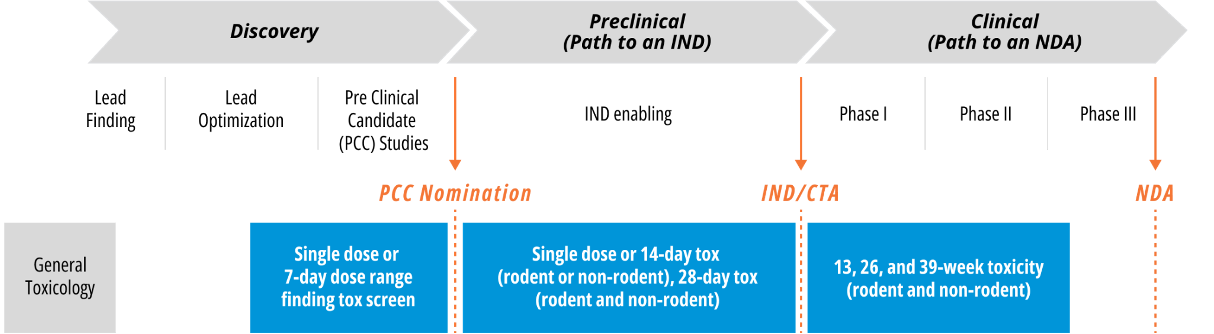
Single-Dose Acute Toxicity in Drug Development
Single-dose studies are critical components of your drug development progression. In addition to serving early toxicology screening purposes, single-dose acute toxicity testing conducted under GLP conditions can serve as the pivotal, IND-enabling study when your clinical plans require only a single dose.

Explore Solutions for Your Program
Explore solutions by development phase, drug modality, therapeutic area, or integrated discovery needs.
You May Also Be Interested In





Get a Quote
Ready to plan your next study? Share your program needs with our team for a tailored estimate.
Frequently Asked Questions
Single-dose acute toxicity studies test the safety of a new drug candidate by exposing animals to a single dose of the compound and monitoring for signs of toxicity over the course of 14 days. According to the FDA’s guidance for the industry on acute toxicity testing, the drug compound is administered in one or more doses during a period not exceeding 24 hours.
Single-dose acute toxicity studies are important to investigate the potential toxic effects of a compound and establish the maximum tolerated dose (MTD) for further toxicological evaluation.
Single-dose acute toxicity studies help you identify the doses for repeat dose studies, which evaluate the effects of repeat administration over a defined period of time.
The data obtained from single-dose studies will help you determine your doses for repeat dose studies based on an understanding of the range of toxic and secondary pharmaceutical effects observed.