
Respiratory Diseases Drug Discovery & Development
Advancing Respiratory Therapies from Target to IND
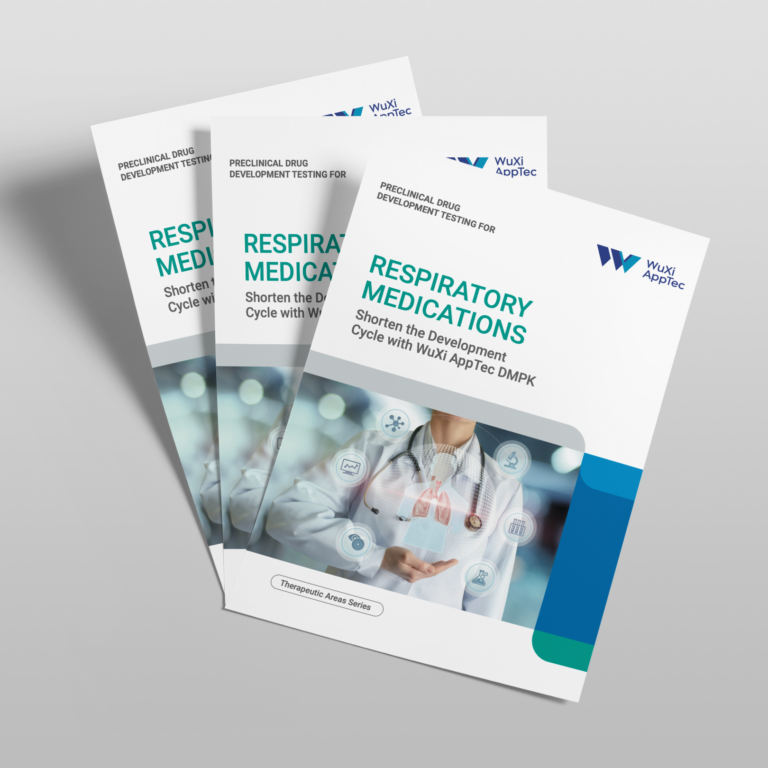
Respiratory diseases remain among the leading causes of morbidity and mortality worldwide, encompassing chronic inflammatory disorders, fibrotic diseases, pulmonary vascular diseases, and acute respiratory conditions. Developing effective therapies requires translational disease models that accurately reflect complex immune responses, airway remodeling, fibrosis, pulmonary function, and drug delivery challenges.
WuXi Biology and Testing provides integrated respiratory disease drug discovery solutions supporting programs from early target validation through IND submission. Our platform combines discovery biology, in vitro and ex vivo assays, disease-relevant in vivo pharmacology, pulmonary drug delivery, DMPK, bioanalysis, and safety assessment to accelerate the development of small molecules, biologics, inhaled therapies, oligonucleotides, peptides, and other emerging therapeutic modalities. Our capabilities span major respiratory indications including asthma, COPD, idiopathic pulmonary fibrosis (IPF), pulmonary arterial hypertension (PAH), acute lung injury (ALI/ARDS), rhinitis, and additional airway inflammatory diseases.
Comprehensive Respiratory Research Across Therapeutic Modalities
Respiratory drug discovery often requires combining advanced disease biology with clinically relevant pharmacology models and specialized pulmonary delivery technologies. Our integrated platform supports programs from target validation through candidate selection and IND-enabling studies by combining discovery biology, disease models, DMPK, bioanalysis, and safety assessment within a seamless workflow.
These capabilities support the discovery and development of small molecules, biologics, oligonucleotides, inhaled therapeutics, and other emerging modalities by tailoring study strategies to each therapeutic approach, helping accelerate development while reducing the complexity of managing multiple providers.
Addressing Respiratory Drug Discovery Challenges Throughout Development
Challenges
Identifying highly selective, druggable targets and demonstrating robust biological activity while optimizing compounds for pulmonary or systemic delivery.
Solutions
- Target identification and validation
- Reporter gene and cellular functional assays
- Airway epithelial and immune cell assays
- Phenotypic screening and mechanism-of-action studies
- Translational biomarker identification
Challenges
Demonstrating target engagement, pathway modulation, or gene silencing in disease-relevant models while addressing target accessibility and modality-specific biology.
Solutions
- Target engagement and receptor occupancy assays
- Cytokine and immune signaling assays
- Human primary cell and disease-relevant cellular models
- Biomarker discovery supporting translational development
Challenges
Demonstrating efficacy, pulmonary function improvements, and PK/PD relationships using clinically relevant respiratory disease models.
Solutions
- Asthma, COPD, pulmonary fibrosis, and ALI/ARDS models
- Pulmonary function testing
- BALF analysis
- Histopathology
- PK/PD biomarker assessment
Challenges
Evaluating target-specific efficacy, immune responses, and durable pharmacodynamic effects in translational respiratory disease models.
Solutions
- Humanized and transgenic models, where appropriate
- Immune profiling
- Cytokine analysis
- Translational pharmacology
- Biomarker-driven efficacy assessment
Challenges
Characterizing pulmonary and systemic exposure while optimizing ADME properties and dosing strategies.
Solutions
- Comprehensive DMPK studies
- Pulmonary drug delivery platforms
- PK/PD modeling
- Bioanalytical assay development
Challenges
Understanding biodistribution, target-mediated disposition, and pharmacodynamic activity to support dose selection.
Solutions
- Ligand-binding and LC-MS bioanalysis
- Biomarker assays
- Tissue distribution studies
- PK/PD integration
Challenges
Assessing pulmonary and systemic safety while supporting progression into IND-enabling studies.
Solutions
- Early safety assessment
- GLP toxicology
- Respiratory pathology
- IND-enabling toxicology studies
Challenges
Characterizing target-related and modality-specific safety risks to support first-in-human development.
Solutions
- Integrated safety assessment
- Bioanalysis and immunogenicity testing
- GLP toxicology
- Regulatory support through IND submission
Asthma & Airway Inflammation Research
Our integrated asthma platform supports discovery from early pathway validation through translational in vivo pharmacology. We combine cytokine reporter assays, immune cell functional assays, airway epithelial biology, and disease-relevant asthma models to evaluate therapeutic efficacy across allergic, eosinophilic, and neutrophilic disease phenotypes.
Capabilities include:
- IL-33, IL-4, IL-13 and TSLP pathway assays
- Mast cell degranulation and Th2 migration assays
- OVA- and HDM-induced asthma models
- Humanized asthma models
- Ex vivo tracheal ring constriction assays
- Pulmonary function testing
- BALF biomarkers and histopathology
Pulmonary Fibrosis Research
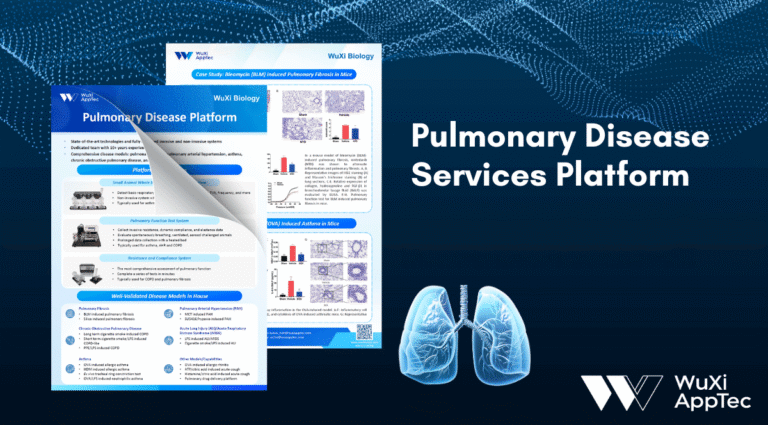
WuXi Biology and Testing supports pulmonary fibrosis drug discovery using complementary in vitro and in vivo platforms that model disease progression from fibroblast activation through tissue remodeling. 6 validated human lung cell lines, including patient-derived IPF fibroblasts, support mechanistic studies alongside bleomycin-induced and silica-induced fibrosis models.
Capabilities include:
- TGF-β-driven fibrosis assays
- EMT models
- Six validated lung cell lines
- Bleomycin-induced pulmonary fibrosis
- Silica-induced pulmonary fibrosis
- Pulmonary function measurements
- Fibrosis biomarker analysis
- Histopathology and semi-quantitative fibrosis scoring (Ashcroft score)
Pulmonary Drug Delivery & Translational Pharmacology
Respiratory therapies frequently require specialized delivery technologies to accurately evaluate efficacy and pulmonary exposure. Our platform supports multiple administration routes and pulmonary function systems that enable clinically relevant assessment throughout preclinical development.
Capabilities include:
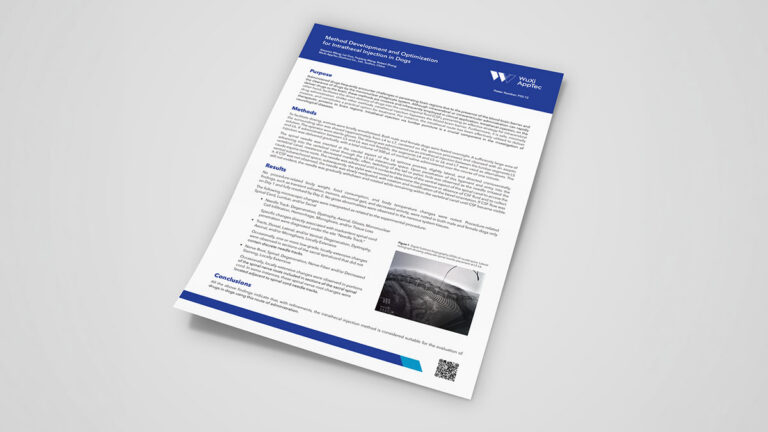
- Intratracheal administration
- Intranasal delivery
- Nose-only inhalation systems
- Whole-body inhalation exposure
- Dry powder insufflation
- Whole-body plethysmography
- Resistance and compliance systems
- Pulmonary function testing across multiple species
Supporting Multiple Respiratory Therapeutic Modalities
Respiratory drug discovery increasingly relies on diverse therapeutic approaches to address complex disease biology. We support the discovery and preclinical development of multiple therapeutic modalities through integrated biology, pharmacology, DMPK, bioanalysis, and safety assessment, selecting the most appropriate assays and disease models for each mechanism of action.
Capabilities include:
- Small molecule discovery and optimization
- Monoclonal and bispecific antibodies
- Antibody-drug conjugates (ADCs)
- Peptides and recombinant proteins
- Oligonucleotides (ASOs and siRNA)
- mRNA therapeutics
- Inhaled therapeutics and pulmonary drug delivery
Supporting services include:
- Target engagement and mechanism-of-action studies
- Disease-relevant in vitro and in vivo models
- Pulmonary delivery platforms
- PK/PD and biodistribution studies
- Translational biomarker analysis
- Bioanalysis and GLP safety assessment
Related Services
Discovery Biology
Advance your program from target discovery to lead selection with integrated biology, pharmacology, and disease models.
Learn More
DMPK
Optimize candidate selection with integrated ADME, pharmacokinetics, and PK/PD studies from discovery through development.
Learn More
Bioanalysis
Generate reliable PK, biomarker, immunogenicity, and bioanalytical data to support drug development.
Learn More
Safety Assessment
Advance candidates confidently with integrated toxicology, safety pharmacology, and IND-enabling studies.
Learn More
You May Also Be Interested In

Discuss Your Program with Us
Share your development goals and key challenges with our experts to define the right path forward.
Frequently Asked Questions
Respiratory diseases are conditions that affect the lungs and airways, impairing breathing and gas exchange. They include chronic inflammatory diseases, fibrotic disorders, pulmonary vascular diseases, infectious diseases, and acute respiratory conditions.
Respiratory diseases are often driven by complex interactions between immune cells, structural lung cells, and environmental factors. Effective therapies must demonstrate efficacy in disease-relevant models while addressing challenges such as target selection, pulmonary delivery, and translational predictability.
Respiratory drug development includes a wide range of therapeutic modalities, including small molecules, monoclonal antibodies, peptides, oligonucleotides, advanced therapeutics, inhaled therapies, and other emerging approaches. The optimal modality depends on the disease biology, target, and intended mechanism of action.
Drug candidates are typically evaluated using a combination of in vitro assays, disease-relevant animal models, pharmacokinetic and pharmacodynamic studies, biomarker analyses, and safety assessments to establish efficacy, mechanism of action, and translational potential before clinical development.
Yes. We offer specialized pulmonary drug delivery capabilities, including intranasal, intratracheal, and inhalation administration, together with pulmonary function testing, PK/PD analysis, and respiratory disease models to evaluate inhaled therapeutic candidates.
We combine disease-relevant cellular assays, animal models, pulmonary drug delivery, pharmacodynamic biomarkers, bioanalysis, and PK/PD studies to generate translational data that supports candidate selection and helps bridge preclinical findings to clinical development.
WuXi Biology and Testing supports respiratory drug discovery across a broad range of therapeutic modalities, including small molecules, monoclonal antibodies, bispecific antibodies, antibody-drug conjugates (ADCs), peptides, oligonucleotides (ASOs and siRNA), mRNA therapeutics, and inhaled therapies. Assays, disease models, and development strategies are tailored to each modality.
Yes. We offer humanized transgenic mouse models (hIL-4/hIL-4Rα, hTSLP/hTSLPR, hTSLP/hTSLPR/hIL33/hST2, hTL1A, hIgE/hFcεR) that respond to established biologic mechanisms, supporting head-to-head benchmarking against approved therapies.
Our platform includes a validated panel of six human lung cell lines, including an IPF patient-derived fibroblast line, modeling TGF-β1-driven myofibroblast differentiation and epithelial-mesenchymal transition.