
Oncology Models
In Vitro and Ex Vivo Oncology Models for Drug Discovery
WuXi Biology and Testing provides in vitro and ex vivo oncology models to support oncology research and drug discovery. Our extensive panel includes more than 600 authenticated and validated human cancer cell lines spanning 30+ cancer types, complemented by engineered and drug-resistant models. Rigorous cell banking, mycoplasma testing, STR verification, growth characterization, and Standard-of-Care profiling support reliable model selection and high-quality study outcomes.
Our immuno-oncology capabilities include primary immune cell profiling from tumor-infiltrating lymphocytes and tissues, with analysis of immune cell populations, functional markers, and intracellular biomarkers. We also offer in vitro compound screening for potency, combination effects, and synergy, as well as soluble biomarker analysis using ELISA/CBA/MSD/Luminex/Olink and ELISPOT and molecular profiling through NanoString/RNAseq/scRNAseq.
Cancer Cell Panel Screening & In Vitro Oncology Assays
We offer a diverse line of in vitro screening panels with more than 600 authenticated, validated human cancer cell lines across 30+ cancer types. Our cancer cell line panel provides powerful tools for cancer research and drug discovery. Key features of the WuXi Biology and Testing cancer cell panel include:
- High-quality cell banking system with mycoplasma-testing and STR verification
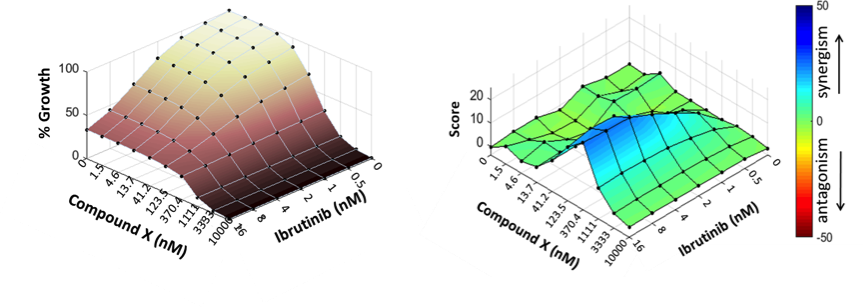
- Single agent and combination compound screening for potency (% inhibition & IC50) and synergy (combination index CI)
- Study design with stringent quality control
- Cell growth curve and Standard of Care (SoC) validation data to support cell model selection
In addition to standard human cancer cell lines, we also offer services using:
- Non-cancerous cell lines
- Drug-resistant cell lines
- Engineered cell lines
- PDX-derived cell lines
- Cell lines from other species (e.g., mouse, rat)
Human Cancer Cell Line Panel
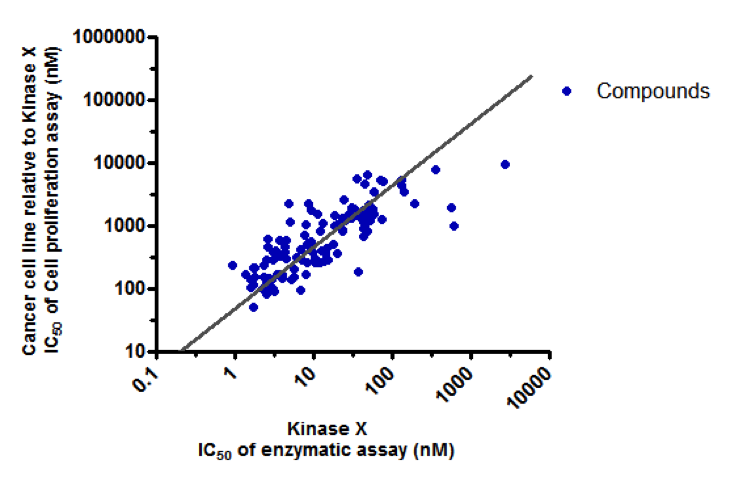
More than 600 human cancer cell lines are available for oncology drug discovery. The cell banking system is a two-tiered system with mycoplasma testing and STR validation. Established cell growth curve data and Standard-of-Care profiling enhance overall study quality and reliability.
Immuno-Oncology
Integrated in vitro and ex vivo immuno-oncology capabilities support functional assessment of immune cells, tumor microenvironment profiling, and biomarker-driven evaluation of cancer immunotherapies.
Our immuno-oncology research capabilities include:
- Immunological function assessment
- Tumor microenvironment (TME) analysis
- TCR/BCR repertoire analysis
- Tumor-infiltrating lymphocyte (TIL) analysis
- Biomarker analysis
- Mechanism of Action (MOA) exploration
Immuno-Oncology Research Capabilities
- Immunological function assessment
- Tumor microenvironment analysis
- TCR/BCR repertoire analysis Tumor-infiltrating lymphocyte (TIL) analysis
- Intercellular interaction analysis
Immuno-Oncology In Vitro Functional Assays
A broad range of in vitro functional assays supports the characterization of immune cell activation, differentiation, polarization, cytotoxicity, suppression, exhaustion, and compound-mediated immune responses.
Immune Cell and Tumor Microenvironment Profiling
Comprehensive immune cell profiling supports the characterization of immune cell populations, subsets, phenotypes, and functional markers across oncology and immuno-oncology studies.
Capabilities include:
- Immune primary cell population profiling:
- Lymphocytes: T cells, B cells, NK cells, etc.
- T-cell subsets: CD4+ and CD8+ T cells, Tregs, Th1/Th2/Th17 cells, and naïve, memory, effector T cells, etc.
- Myeloid populations: dendritic cells (DCs), macrophages, granulocytes, monocytes, MDSCs, etc.
- Macrophage phenotypes: M1/M2 macrophages
- Functional and intracellular marker analysis:
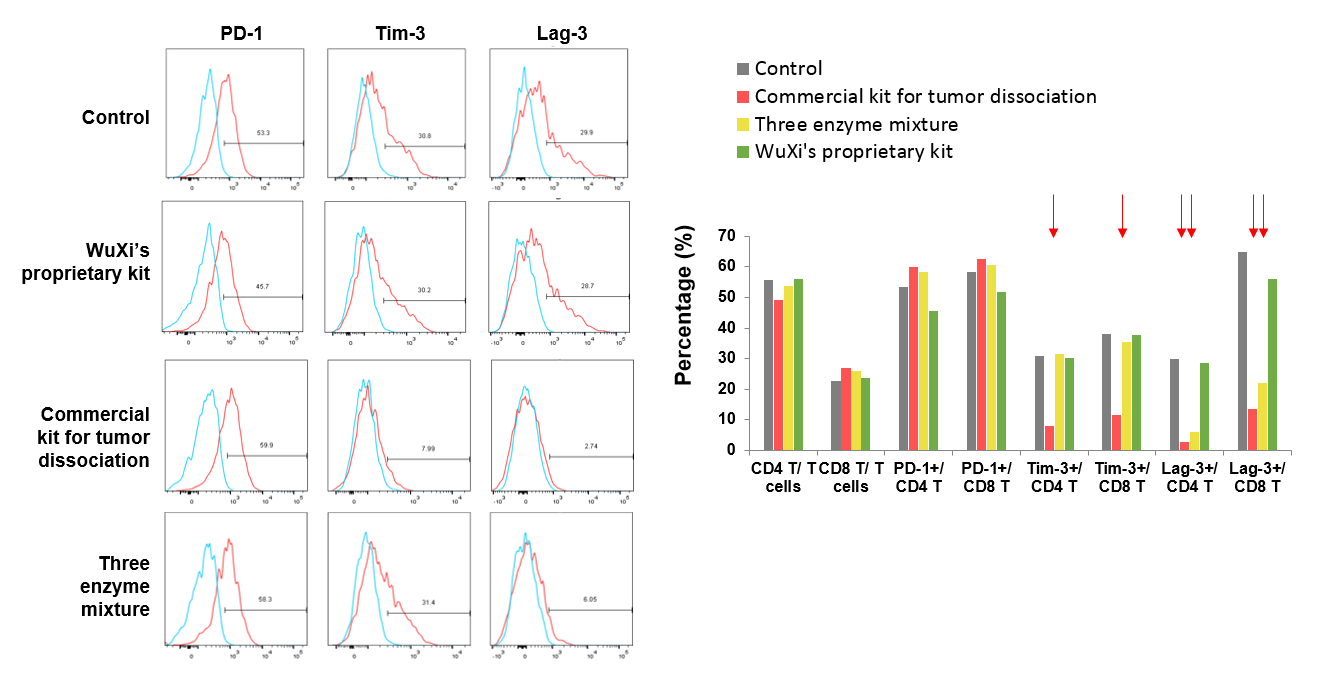
- Immune checkpoints: PD-1, PD-L1/2, CTLA-4, TIM-3, LAG-3, etc.
- Co-stimulatory markers: OX40, 4-1BB, ICOS, etc.
- Functional markers and cytokines: Ki67, IL-2, IL-17, IFN-γ, TNF-α, granzyme B, perforin, etc.
Tumor and Peripheral Immune Profiling
Ex vivo immune profiling across tumor tissues, the tumor microenvironment, lymphoid tissues, and peripheral blood supports the characterization of immune cell populations, phenotypes, activation, and differentiation.
Capabilities include:
- Tumor-infiltrating lymphocyte (TIL) analysis
- CD4+ and CD8+ T cells, MDSCs, M1/M2 macrophages, DCs, NK cells, B cells, etc.
- Tregs and Th1/Th2/Th17 subsets
- Immune and co-stimulatory markers including PD-1, TIM-3, LAG-3, OX40, and 4-1BB, etc.
- Tumor microenvironment (TME) analysis
- CTLs, NK cells, Tregs, MDSCs, tumor-associated macrophages (TAMs), and Cancer-Associated Fibroblasts (CAFs)
- Analysis by flow cytometry, IHC, and IF
- Lymphoid tissue and peripheral blood analysis
- Immune-cell populations and subsets, including frequency, activation, and differentiation
- Cytokine and chemokine analysis
Biomarker Analysis
Biomarker analysis across soluble, cellular, tissue, and gene expression readouts supports characterization of treatment response and immune activity in oncology and immuno-oncology studies.
- Soluble biomarkers: ELISA/CBA/MSD/Luminex/Olink, ELISpot
- Cell-based biomarkers: FACS
- Tissue-based biomarkers: IHC and multiplex immunofluorescence
- Gene expression profiling – NanoString, RNAseq, scRNAseq, spatial transcriptome, RNAscope
Immune Profiling and Biomarker Platforms
WuXi Biology and Testing provides biomarker services for immuno-oncology research, spanning from discovery through translational and clinical studies. Our technology platform includes a CAP-certified pathology lab, a flow cytometry and molecular biology lab, all operating in strict compliance with GCP standards. Our team is composed of highly trained immunologists, board-certified pathologists, and biomarker experts.
Flow Cytometry
- >40-channel flow cytometry analysis
- >100 cell markers and biomarkers
- Baseline TIL (tumor-infiltrating leukocytes) data from across >30 models
- TIL and immune-cell subset analysis
- Checkpoint/co-stimulatory marker analysis
- In vitro and in vivo phospho-flow
- Function analysis of immune cells
- ICS for cellular immune response
- Biomarker analysis
- Receptor occupancy analysis
- PD/PK analysis for CAR-T/TCR-T trial
- High-dimensional data mining
Pathology and Multiplex Immunofluorescence
- Histology and pathology: FFPE preparation/IHC/IF to support pre-clinical pathology diagnosis for drug safety assessment and efficacy evaluation
- Multiplex immunofluorescence for tumor and microenvironment analysis, including
- Immune cell infiltration analysis
- Spatial and proximity analysis
- Protein localization and cellular source identification
- Complex tissue structure determination
- Evaluation of gene expression regulation
- Clinical biomarker testing capabilities include:
- H&E and histology analysis
- FFPE sample processing and sectioning; IHC/ICC, IF, EHC, TCT, FISH, DISH, RNAscope, and multiplex-IF
NanoString-Based Gene Expression Profiling
- Gene expression profiling with up to 800 genes per panel
- Ready-to-use panels and customized panel
- Profiling of challenging sample types, including FFPE tissues, cell lysates, etc.
- Panel covering key genes, pathways and biological functions in immunology/oncology
Bioinformatics Analysis
Bioinformatics analysis supports the interpretation of complex immune and molecular datasets, including cell-type identification and phenotyping, differential gene expression analysis, functional enrichment, cell-cell interaction analysis and customized analysis.
Molecular Biology Platform
- Quantitative polymerase chain reaction (qPCR) to support efficacy and safety evaluation, including target gene copy number variation in CAR-T cells and replication-competent lentivirus (RCL) testing in CAR-T studies.
- Oncology molecular testing: cMET exon14 skipping and EGFR mutation analysis
- Immune repertoire analysis: TCR/BCR repertoire profiling and diversity assessment
- Immunophenotyping assays: Monitoring of epigenetic markers

Explore Solutions for Your Program
Explore solutions by development phase, drug modality, therapeutic area, or integrated discovery needs.
You May Also Be Interested In


Get a Quote
Ready to plan your next study? Share your program needs with our team for a tailored estimate.