
In Vivo ADME Testing: Study Design and Key Considerations
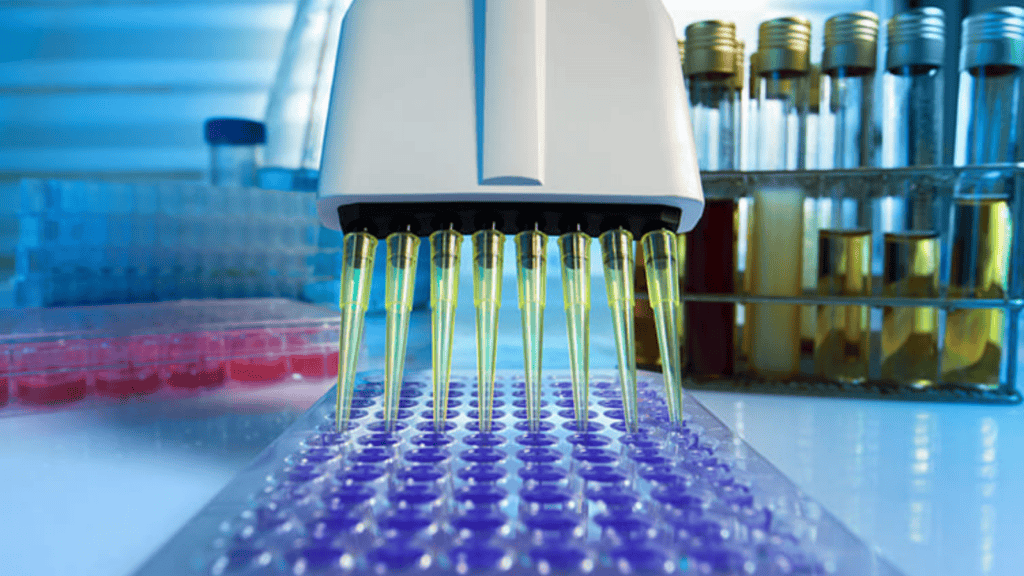
In vivo ADME studies characterize how a test article is absorbed, distributed, metabolized, and excreted within a biological system. These studies complement in vitro DMPK testing by showing how pharmacokinetic (PK) and disposition processes interact under physiological conditions, helping drug developers understand systemic exposure, tissue distribution, metabolic pathways, and routes of elimination.
Early evaluation involving in vitro DMPK can inform the design and interpretation of subsequent in vivo studies. Because no single experiment captures every endpoint, in vivo ADME study design must be carefully tailored to the specific test article and development question. Comprehensive programs combine pharmacokinetics, mass balance studies, tissue distribution, metabolite profiling, and excretion studies to gather complementary insights.
Factors such as the test system, dosing parameters, administration routes, sampling strategies, and analytical methods directly dictate overall study usefulness. Ultimately, ADME investigations should be planned within the broader DMPK and nonclinical development program rather than treated as isolated exercises.
What Is In Vivo ADME Testing?
ADME evaluates the foundational pillars of drug disposition: absorption, distribution, metabolism, and excretion. Together, ADME, drug disposition, and pharmacokinetics form the core of nonclinical drug evaluation. In vivo studies characterize the disposition of a test article within an intact biological system, capturing complex physiological interactions that isolated cellular elements cannot replicate. Depending on the assay goals, researchers may measure parent test article exposure alone, or evaluate total drug-related material, including downstream metabolites.
Different in vivo protocols answer distinct disposition questions. A single study protocol rarely measures every possible parameter. These findings contribute directly to understanding systemic exposure, metabolic stability, and elimination routes. In vivo ADME is not a monolithic, standardized test, but rather a flexible suite of customized study types selected according to precise scientific milestones.
How Do In Vitro DMPK and In Vivo ADME Studies Work Together?
In vitro DMPK studies characterize individual drug properties in controlled experimental systems, while in vivo ADME studies evaluate how absorption, distribution, metabolism, and excretion interact within an intact biological system. Used together, these approaches can provide a more complete understanding of drug disposition and help guide development decisions.
|
Consideration |
In vitro DMPK |
In vivo ADME |
|
Experimental context |
Controlled biological systems |
Intact biological system |
|
Typical role |
Early characterization and screening |
Integrated characterization of disposition |
|
Common questions |
Stability, permeability, protein binding, metabolic pathways, DDI potential |
Exposure, distribution, metabolism, excretion, mass balance |
|
Development value |
Identify and characterize potential liabilities |
Evaluate how ADME processes interact under physiological conditions |
|
Relationship |
Can help inform later study design |
Can contextualize and build upon earlier in vitro findings |
Early in vitro DMPK data characterize intrinsic drug properties and flag potential metabolic or permeability liabilities. These initial evaluations help refine subsequent in vivo study design by predicting clearance mechanisms or highlighting potential metabolite pathways. Conversely, intact systems provide integrated physiological contexts that isolated models cannot duplicate, though in vitro results do not always translate linearly to whole animals. Integrating in vitro DMPK with in vivo ADME ensures a cohesive strategy for candidate advancement.
What Types of In Vivo ADME Studies Are Used in Drug Development?
Selecting specific study designs depends entirely on the active ADME question under investigation.
|
Study type |
Primary question |
|
Pharmacokinetic studies |
What is the test article's systemic exposure over time? |
|
Mass balance / excretion studies |
How much drug-related material is recovered, and through which routes is it eliminated? |
|
Tissue distribution studies |
Where does drug-related material distribute? |
|
Metabolite profiling and identification |
Which metabolites are formed and where are they detected? |
|
Biliary excretion studies |
What role does biliary elimination play? |
|
Radiolabeled ADME studies |
What is the overall disposition of total drug-related material? |
Pharmacokinetic Studies
Pharmacokinetic evaluations measure concentration-time profiles to track systemic exposure patterns. Evaluators rely on standard parameters such as maximum plasma concentration, time of maximum concentration, area under the curve, systemic clearance, and terminal half-life. These metrics clarify dose-exposure relationships, helping teams establish linear or non-linear kinetic profiles to direct subsequent development decisions.
Mass Balance and Excretion Studies
Mass balance evaluations measure the recovery of total administered drug-related material across various biological matrices over time. These investigations quantify excretion pathways, primarily tracking urinary and fecal elimination routes. Collecting relevant matrices across appropriate intervals ensures accurate mass recovery calculations, illuminating overall absorption rates and elimination kinetics.
Tissue Distribution Studies
Characterizing tissue distribution can help contextualize exposure in tissues of interest and support interpretation of other nonclinical findings. Tissue distribution data contextualize local concentrations within organs of interest. Quantitative whole-body autoradiography (QWBA) is frequently deployed to map spatial concentrations of drug-related material throughout the body, linking tissue accumulation data directly to nonclinical toxicology observations.
Metabolite Profiling and Identification
Measuring parent compound levels alone does not always provide a complete disposition profile. Metabolite profiling and identification studies isolate and characterize circulating or excreted biotransformation products. Comparing metabolic profiles across species helps verify whether animal models mirror human pathways, shaping downstream nonclinical safety strategies.
What Are the Key Considerations When Designing an In Vivo ADME Study?
In vivo ADME study design generally begins by defining the scientific question, then selecting an appropriate test system, dose and administration route, sampling strategy, and analytical approach. Each element should be aligned with the intended use of the data and existing DMPK findings.
1. What Question Does the Study Need to Answer?
Objectives must be explicitly defined, whether focusing on systemic exposure, mass balance, excretion routes, tissue distribution, metabolic pathways, metabolite characterization, or following up on prior in vitro DMPK signals. Study execution should follow the scientific inquiry rather than relying on rigid, pre-packaged templates.
2. Which Test System Is Appropriate?
Model selection must align with the broader pipeline strategy, incorporating existing metabolic insights and historical pharmacokinetic data. Integrating findings from earlier in vitro DMPK assays ensures biological relevance while accounting for species-specific differences in disposition pathways.
3. What Dose and Route of Administration Should Be Used?
Dose and route of administration should align with the study objective and relevant exposure considerations. Formulation is also important because it can affect absorption, systemic exposure, metabolism, and excretion.
4. What Sampling Strategy Is Needed?
Protocols must designate appropriate biological matrices and collection intervals to capture complete concentration-time curves. Mass balance protocols require extended collection periods to ensure sufficient recovery, accounting for slow elimination phases where applicable.
5. What Analytical Strategy Will Support the Study?
Analytical methods should be selected and qualified or validated, as appropriate, based on the study objectives and intended use of the data. Methods may include LC-MS/MS for quantifying parent compounds or specific metabolites, radioactivity measurements for total drug-related material, and LC-HRMS for metabolite profiling and identification. Appropriate sensitivity, selectivity, and sample stability should be established to support reliable data interpretation.
When Are Radiolabeled Compounds Used in In Vivo ADME Studies?
Radiolabeled compounds may be used when a study needs to track total drug-related material rather than the parent test article alone. This approach can support mass balance, excretion, tissue distribution, and metabolite characterization by helping determine where drug-related material goes and how it is eliminated. Isotopic labeling enables comprehensive tracking of parent molecules and complex metabolites.
Strategic placement of the radioisotope – such as carbon-14 or tritium – ensures that metabolic cleavage does not obscure tracking data. Chemical purity, high specific activity, and radiochemical stability are critical variables that must be verified prior to dosing. Radiosynthesis must be closely coordinated with biological study execution, though not every in vivo protocol requires a radioactive tag.
How Do PK, Mass Balance, Tissue Distribution, and Metabolite Data Work Together?
No single ADME endpoint provides a complete picture of drug disposition. PK data characterize systemic exposure, mass balance evaluates recovery and elimination, tissue distribution shows where drug-related material is present, and metabolite profiling identifies relevant products of metabolism. Together, these datasets can provide a more integrated understanding of a test article's in vivo disposition. When an unexpected outcome emerges in one dataset – like prolonged retention in a specific organ – other streams help clarify whether the observation stems from active tissue binding or metabolite accumulation.
When Should In Vivo ADME Studies Be Conducted?
Timing depends on the scientific question and intended use of the data. Exploratory in vitro DMPK and preliminary pharmacokinetic evaluations help resolve basic disposition characteristics early in discovery. More definitive studies may be conducted as the program and regulatory strategy mature. Existing PK, metabolism, and safety findings may also influence study timing. Ultimately, studies should be timed so the resulting data can support a defined development or regulatory decision.
Common Challenges in In Vivo ADME Study Design
Oversights during experimental planning can limit data utility and generate avoidable delays. Common pitfalls include initiating study design without clarifying the primary scientific question or neglecting prior insights. Other frequent issues involve selecting inappropriate test systems, introducing administration routes that mismatch clinical intents, or applying insufficient sampling durations that miss terminal elimination phases.
Incomplete mass recoveries, poor coordination between study conduct and bioanalytical teams, or unstable radiolabel positioning can similarly compromise outcomes. Treating pharmacokinetic, mass balance, and metabolite datasets as isolated silos rather than unified components prevents a cohesive understanding of drug behavior.
Choosing a Laboratory Testing Partner for In Vivo ADME Studies
Drug developers evaluating a laboratory testing partner should consider:
- Comprehensive breadth of in vitro DMPK and in vivo ADME capabilities
- Proven capacity to design flexible, fit-for-purpose studies
- Infrastructure supporting both radiolabeled and non-radiolabeled protocols
- In-house radiochemistry and synthesis expertise
- Advanced mass balance and excretion tracking platforms
- Quantitative whole-body autoradiography and specialized tissue distribution capabilities
- Sophisticated metabolite profiling and structural identification tools
- Robust bioanalytical assay development and validation infrastructure
- Demonstrated capability to integrate multi-disciplinary pharmacokinetic data
- Stringent quality assurance systems and regulatory compliance history
- Scalable capacity supporting continuous pipeline progression
WuXi AppTec provides integrated in vitro DMPK and in vivo PK/ADME capabilities to support drug disposition studies across development programs. By coordinating pharmacokinetic, mass balance, tissue distribution, metabolite profiling, bioanalytical, and radiolabeled study capabilities where appropriate, drug developers can align study design and analytical strategy around the questions their programs need to answer.
Explore WuXi AppTec’s in vivo PK/ADME studies and DMPK capabilities to start planning a fit-for-purpose study strategy.
Frequently Asked Questions About In Vivo ADME Testing
What does ADME stand for?
ADME stands for absorption, distribution, metabolism, and excretion. These four core processes describe how a pharmaceutical compound enters the body, travels through systemic circulation, undergoes chemical biotransformation, and is ultimately eliminated.
What is an in vivo ADME study?
An in vivo ADME study is an investigation conducted within an intact living biological system to characterize how a test article is absorbed, distributed, metabolized, and excreted over time, providing critical insights into whole-body drug disposition.
What is in vitro DMPK testing?
In vitro DMPK testing evaluates drug properties such as metabolic stability, membrane permeability, plasma protein binding, and drug-drug interaction potential using controlled, cell-free or cellular experimental systems outside a living organism.
What is the difference between in vitro DMPK and in vivo ADME testing?
In vitro DMPK testing utilizes controlled, isolated systems to screen specific biochemical properties, whereas in vivo ADME testing evaluates integrated disposition processes within an intact living system, combining complementary perspectives on drug behavior.
What is a mass balance study?
A mass balance study measures the total recovery of administered drug-related material across various biological elimination pathways, ensuring that input quantities align with total output recovery over a defined collection period.
Why are radiolabeled compounds used in ADME studies?
Radiolabeled compounds utilize specific radioactive isotopes to track total drug-related material, helping researchers track parent compounds, metabolites, and other drug-related material across relevant matrices and tissues.
What is QWBA?
Quantitative whole-body autoradiography is an imaging technique used in tissue distribution studies to measure the concentration and spatial distribution of radiolabeled drug-related material across thin sections of an entire experimental subject.
When should in vivo ADME studies be conducted?
The timing of in vivo ADME studies depends on the scientific question, development stage, existing PK and metabolism data, and intended use of the results. Studies should be timed so the resulting data can inform a defined development or regulatory decision.
How are in vivo ADME studies used in drug development?
The resulting data inform systemic exposure parameters, elucidate clearance pathways, identify relevant metabolites, and guide dose selection for downstream safety evaluations and clinical development strategies.
You May Also Be Interested In


Discuss Your Program with Us
Share your development goals and key challenges with our experts to define the right path forward.