
Biochemical Assays
Integrated Biochemical Screening for Drug Discovery
Biochemical assays are essential tools for measuring compound binding, target activity, potency, and mechanism of action in drug discovery. Our plate-based biochemical screening capabilities support assay development, binding and activity assays, mechanism-of-action studies, these capabilities support every stage of the drug discovery process, including, hit identification, hit-to-lead, lead optimization, candidate selection, and IND-enabling studies.
Biochemical assay strategies can be adapted to diverse therapeutic modalities, including small molecules, peptides, oligonucleotides, biologics and antibodies, conjugates, and bifunctional molecules. Assay formats and technologies are selected according to the modality, target class, and mechanism of action, with orthogonal biophysical and cellular approaches available to confirm target engagement and functional activity.
Enzyme Assays
Assay Development
- Biochemical assay development supported by broad enzymology expertise across drug discovery efforts.
- Assay development across diverse target classes, including kinases, phosphatases, ATPases, GTPases (including KRAS), polymerases, dehydrogenases/reductases, proteases, epigenetic targets (HMTs, KDMs, HDACs, and bromodomains), ligand-receptor binding, and protein-protein interactions (PPIs).
Assay Formats
- End-point and kinetic assay formats.
- Plate-based screening platform.
- Major assay platforms: TR-FRET, FP, ADP-Glo, Z-LYTE, ELISA, absorbance.
Compound Profiling
- Routine screening workflows designed to provide consistent, reliable data on defined timelines.
- Potency measurements across multiple target classes, including IC50 and Ki determination.
Inhibitor Characterization
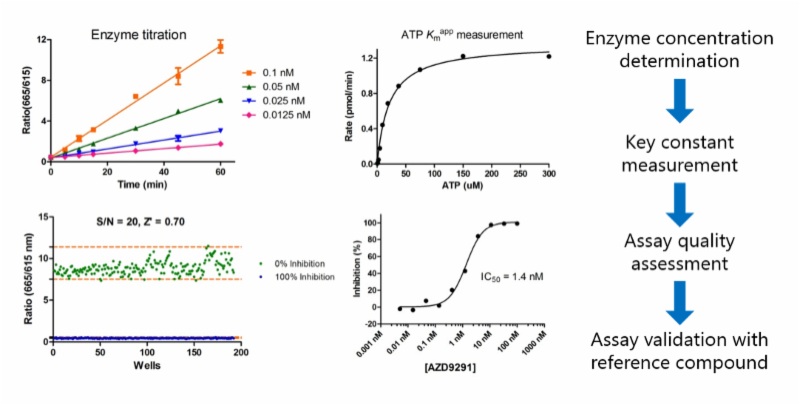
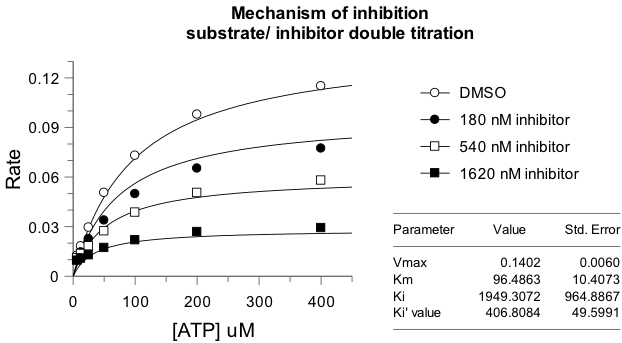
- Mechanistic characterization can support SAR interpretation by evaluating mechanism of inhibition, such as assessing covalent inhibitors through time-dependent inhibition, and reversibility.
- Mechanistic studies can help distinguish inhibition profiles and guide compound optimization.
Kinase Assays
As one important class of drug target, kinases remain of interest to both the pharmaceutical industry and academia. To assist efforts in kinase drug discovery, WuXi Biology and Testing offers high-quality, time-efficient and cost-effective kinase solutions for assay development, high-throughput screening (HTS). We provide multiple biochemical assay development formats to support different functional assessments of the drug candidates.
Assay Development
Assay development applies to a broad range of kinases involved in the MAPK pathway, cell cycle, NF-kB pathway, AKT/PKB pathway, JAK/STAT, membrane receptor, etc.
Biochemical assay:
- A variety of formats: TR-FRET (LANCE Ultra, LanthaScreen, HTRF), Caliper, Luminescence (Kinase-Glo, ADP-Glo), Radiometric, IMAP, ADP-Quest, Z’-LYTE, etc.
- Development includes routine assay optimization (enzyme titration, time course, Km determination, etc.) and assay validation (DMSO tolerance, Z’ factor assessment, compound validation, etc).
We also provide services for compound mechanism-of-action (MOA) studies to characterize the identified potent compounds further.
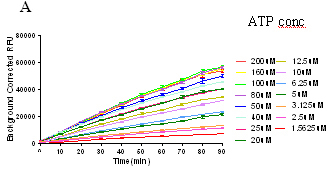
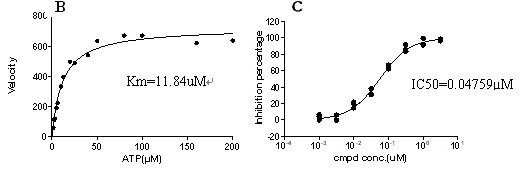
Example of Assay Development
These are the results from various biochemical assay development for protein kinases.
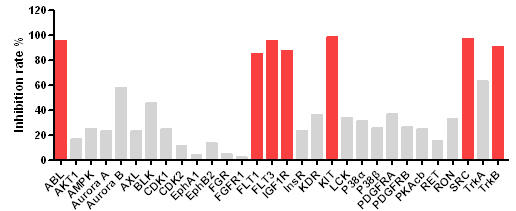
Compound Profiling for Kinase Assay
We support HTS and routine SAR screening against enzyme targets using either WuXi-developed assays or assays transferred from clients.
Radioactive Assays
Radioactive Assay Laboratory Capabilities
- Licensed radioisotopes include 14C, 3H, 32P, 33P, 35S, and 125I.
- Multiple radiometric detection systems support diverse assay formats and applications.
- Instrumentation includes MicroBeta, Tri-Carb, TopCount, and gamma counters.
Assay Targets and Platforms
Targets
Kinases, GPCRs and other membrane proteins, proteases, E3 ligases, transcription factors, etc.
Types of Radioactive Assay Platforms
- Filter binding assay
- SPA (Scintillation Proximity Assay)/FlashPlate
- Metabolic assay
Phosphatase Assays
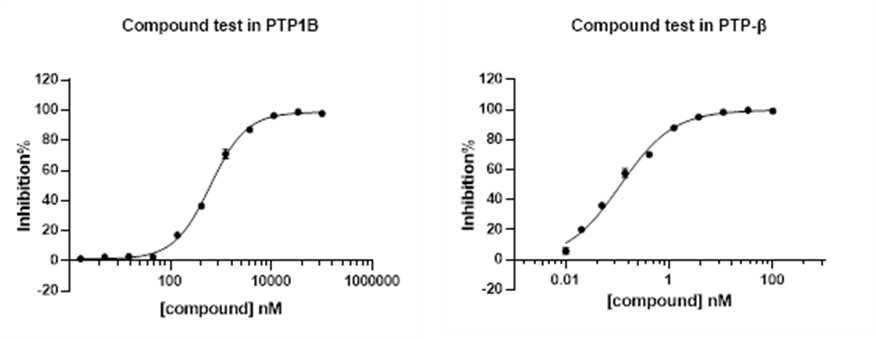
Dysfunction of dephosphorylation has long been linked to the development of human diseases such as obesity, diabetes, cancer, and neurodegeneration. WuXi Biology and Testing offers phosphatase assays for compound screening with high data quality and fast turnaround times.
Customers can pick screening services of their choice, including IC50 determination, single-point test, or regular SAR screening. Phosphatase assays are also available in high-throughput screening and custom assay format.
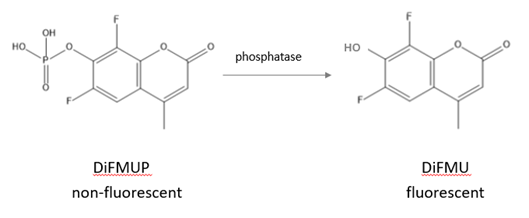
In our prototype phosphatase assay format, the target enzyme hydrolyzes phospho-substrate (DiFMUP) and releases fluorophore (DiFMU). The latter can be detected with excitation at 360 nm and emission at 460 nm. The fluorescence intensity represents the reaction activity. Available in both 96- and 384-well screening formats.
Protease Assays
The human genome contains over 600 protease genes that contribute to fulfilling the “degradome” functionality.1 Many proteases exhibit site-specific cleavage rather than nonspecific degradation; for example, secretases process the amyloid β precursor protein (APP) at precise sites.
Dysregulation of the proteolytic system is associated with many pathologies, such as cancers, neurodegenerative diseases, and cardiovascular diseases. Small-molecule drugs that target specific proteases, such as angiotensin-converting enzyme (ACE), HIV protease, and thrombin, have been developed for the treatment of hypertension, AIDS and thrombosis, respectively.2
To support the discovery of protease drugs, we offer a comprehensive platform of services. With our strong expertise and cutting-edge technologies, we can provide services across a broad spectrum of proteases, including, but not limited to, aspartic, serine, cysteine, and metalloproteases, as well as COVID-19-related protease assays (see table below). These services are provided with the options of IC50 determination or single-point test, and Kinact/KI determination. In addition, we offer protease screening and profiling services, from safety and efficacy perspectives, to characterize candidate protease drugs.
Case Studies | Protease Assays
DNA Damage Response
DNA damage occurs in mammalian cells in many forms, including single-strand breaks (SSBs), base oxidations, double-strand breaks (DSBs), DNA adducts, and intra- and inter-strand crosslinks.3 Different types of damage elicit different molecular and cellular responses, which together form an integrated signaling network that plays a crucial role in the surveillance of DNA integrity and maintenance of genome stability.
Effective repair of DNA damage imposes significant pressure, particularly on highly proliferative cells including cancer cells. Most cancer cells appear to be impaired in their DNA damage response (DDR) capacity and become more sensitive to the imposed DNA damage burden than normal cells.
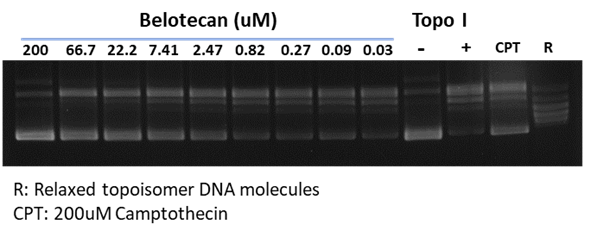
Much effort has been devoted to identifying drugs that inhibit the DDR, as this is expected to enhance the effectiveness of radiotherapy and chemotherapy against cancers. For example, small-molecule inhibitors of key DDR components, such as topoisomerases and other nuclear enzymes, have been developed and tested in numerous clinical trials in cancer.4 To support drug discovery in this field, WuXi Biology and Testing offers a range of assays to screen and characterize topoisomerase inhibitors.
Poly(ADP-ribose) Polymerase (PARP) Biochemical Assays
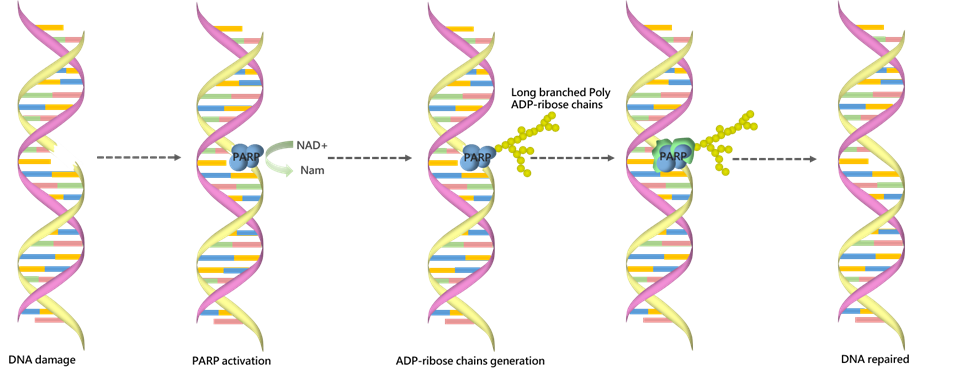
Poly(ADP-ribose) polymerase is a family of enzymes that play important roles in many cellular processes, including DNA repair, cell death, chromatin functions and genomic stability.5 PARPs can transfer ADP-ribose from NAD+ onto target nuclear proteins, forming long branched poly ADP-ribose chains. We offer a panel of PARP-related biochemical assays to support customers’ discovery needs.
Compound screening options in both low- and high-throughput formats are available. Customized assay development can also be provided, as multiple PARPs can be expressed and purified in-house by our protein production team.
PARP1 Assay
The mammalian ARTD/PARP superfamily comprises 17 members. Among these, only four possess bona fide poly(ADP-ribose) polymerase activity: PARP1, PARP2, Tankyrase-1 (PARP5a), and Tankyrase-2 (PARP5b).6 The founding member PARP1 has attracted strong interest in drug discovery for two reasons: 1) monotherapy based on a PARP1 inhibitor was first shown to kill tumors that harbor the BRCA1 and BRCA2 mutations preferentially, 2) PARP inhibitors elicit cytotoxicity in the presence of chemotherapies that induce single-strand DNA breaks.7 To support discovery of novel PARP1 inhibitors, we offer the following related assays.
PARP1 Chemiluminescent Assay (96/384-well plate) A plate-based ELISA where wells are coated with histones. Biotinylated NAD+, PARP1 and activated DNA are added to allow biotin-labeled poly(ADP-ribose) incorporation into histones. Streptavidin-HRP and an ECL substrate are then used to detect the incorporated signal.
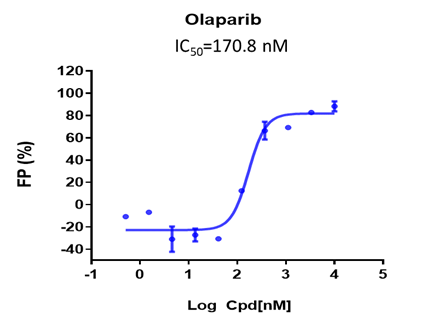
PARP1 Trapping Assay (96/384-well plate)
A fluorescence polarization assay in which PARP1 binds a fluorescently labeled DNA duplex, producing a high polarization signal. When NAD+ is added and PARP1 becomes active it dissociates and the polarization decreases. PARP1 inhibitors prevent dissociation (trap PARP1 on DNA), causing a dose‑dependent increase in polarization.

PARP2 Assay
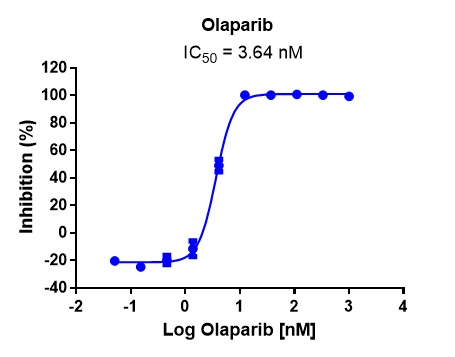
Similar to PARP1, PARP2 contains a catalytic domain and catalyzes NAD+-dependent poly(ADP-ribosyl)ation; however, unlike PARP1, PARP2 lacks the zinc-finger DNA-binding motifs present in PARP1’s N-terminal domain. Many PARP1 inhibitors also suppress enzymatic activity of PARP2.
PARP2 Chemiluminescent Assay (96/384-well plate)
This assay also uses an ELISA-based approach, similar to that used in PARP1 analysis.
PARP2 Homogeneous Assay (384-well plate)
This assay utilizes the AlphaLISA platform, which relies on proximity-based energy transfer through oxygen channeling. Specifically, PARP2 is incubated with activated DNA and a biotinylated substrate, then with streptavidin acceptor beads, followed by incubation with primary antibody and donor beads.

Other PARP-Related Assays
Additional PARP-related assays can be developed and customized according to study needs.
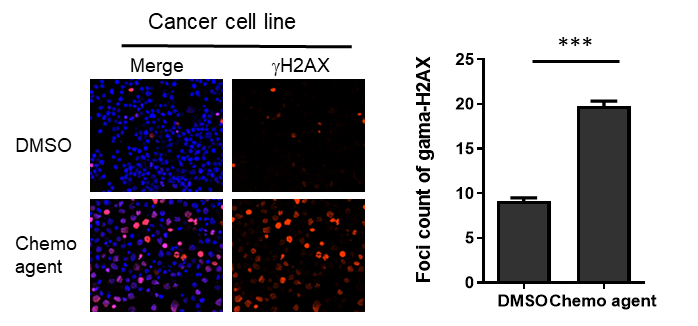
Complementary cell-based imaging assays can evaluate DNA damage-associated markers, such as gamma-H2AX and 53BP1, following irradiation or compound treatment. These analyses can be extended to high-content screening (HCS) formats to support downstream characterization of PARP-targeting compounds.
Additional DNA Damage Response Assays
Additional DDR assay capabilities include targets such as CHEK1/CHEK2 (CHK1/CHK2), CDKs, WEE1, and MDM2, etc., supporting compound screening and mechanistic characterization across complementary DNA damage response pathways.
The interplay among DDR pathways can be leveraged to investigate synthetic-lethality strategies. PARP inhibition in tumors with homologous recombination deficiencies is a well-established example and continues to motivate the discovery of new PARP-targeting compounds.8
Deubiquitination Assays
The ubiquitin–proteasome system (UPS) is the primary proteolytic pathway that regulates protein degradation. Deubiquitinating enzymes (DUBs) regulate various cellular processes, particularly protein degradation, localization, and protein-protein interactions. Dysregulation of DUB activity has been linked to several human diseases, including neurodegenerative diseases.
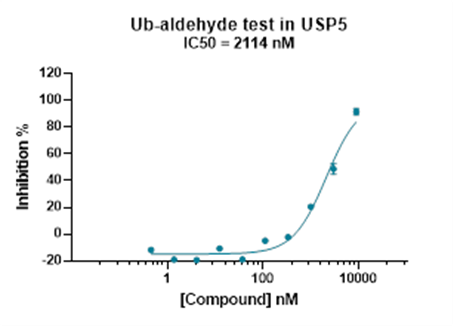
WuXi Biology and Testing offers DUB assays for compound screening to support customers’ drug discovery needs. Available services include IC50 determination or single-point tests. Both regular and high-throughput screening options are available. In addition, custom DUB assay development is also available.
- Assay substrates are selected according to the specific DUB target and include ubiquitin-based fluorogenic reporters for pan-DUB activity profiling, as well as linkage-specific di-ubiquitin or poly-ubiquitin chain substrates for evaluating chain-type selectivity (96/384 formats available)

Biochemical Assay Capabilities Across Drug Discovery
WuXi Biology and Testing’s biochemical assay capabilities support multiple stages of compound characterization, from assay establishment, target binding, activity evaluation, to functional assessment and mechanistic studies. Explore our dedicated capabilities across:
Assay Development
Develop robust assays to support reliable screening and compound evaluation.
Learn More
Binding Assays
Confirm target engagement to identify and prioritize promising compounds.
Learn More
Activity Assay
Measure target activity to accelerate hit discovery and lead optimization.
Learn More
Mechanism-of-Action Studies
Define how compounds act to guide optimization and candidate selection.
Learn More

Explore Solutions for Your Program
Explore solutions by development phase, drug modality, therapeutic area, or integrated discovery needs.
You May Also Be Interested In


Get a Quote
Ready to plan your next study? Share your program needs with our team for a tailored estimate.