
Structural Biology
Our Customized Structural Biology Platform
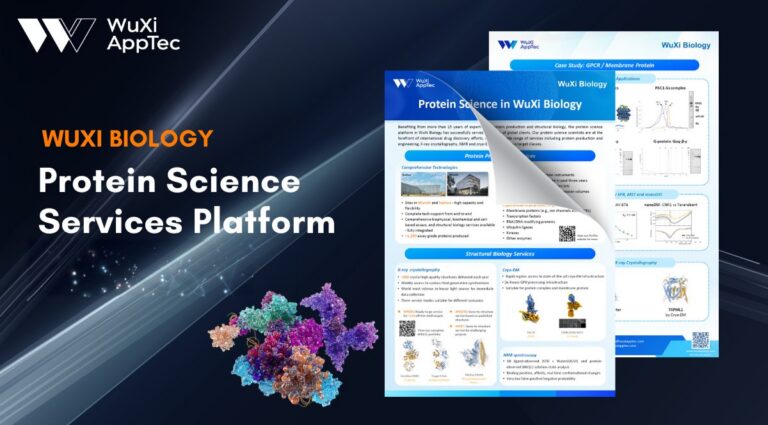
WuXi Biology and Testing’s structural biology platform delivers customized and integrated solutions in drug discovery, X-ray crystallography, CryoEM, NMR, premium protein supply, biophysical analysis, and fragment screening.
Capabilities at a Glance
- High-quality protein production
- >10 orthogonal biophysical assays and screening systems
- >200 targets ready for XPRESS complex structure solution with client ligands
- Fragment-based screening with >3,000-member novel fragment library
- Cryo-EM
- Cell-based thermal shift assays for target engagement
Comprehensive Protein Production and Target Expertise
We produce high-quality recombinant proteins tailored to meet every drug developer's scientific needs. Through our PRIME PROTEIN program, we continuously drive innovation in expression systems and purification processes to generate stringently quality-controlled proteins for use in functional assays, high-throughput screening, cryo-EM, and crystallization. Recombinant proteins can be expressed in E. coli, insect, and mammalian systems in milligram to gram quantities.
For hit validation and characterization, target proteins are produced using our highly parallelized expression and purification workflows. Decades of scientific expertise enable our teams to successfully generate challenging targets and macromolecular complexes, including:
- Membrane proteins (ion channels, transporters, GPCRs, etc.)
- Secreted proteins and cell-surface receptors
- Metabolic enzymes, proteases, and phosphatases
- Kinases, epigenetic regulators, and nuclear receptors
Utilizing our proprietary bi-turbo vector system, target proteins are expressed in parallel across bacterial and insect systems from identical plasmid constructs. These vectors feature specialized promoters for optimal recombinant protein expression timing, while optimized viral DNA backbones enable co-expression of critical factors to enhance overall yield and structural homogeneity. Furthermore, we offer customized mammalian cell expression (such as HEK systems) and stable isotope labeling for specialized biophysical studies. Every recombinant protein undergoes rigorous quality control and stability testing to ensure strict compliance with program specifications.
Assay Grade Protein Production
Seamless Platform from Protein Production to Structure-Based Drug Design
- Cancer and Inflammation: ATM, AMPK, NEK7, PI3K, ROR1, SRC, ULK1, WEE1, NLRP3, KRAS
- Membrane Proteins: Glucose transporter, P2X3, GPR40, CNR1, β2AR
- DNA Damage Response: ATM, ATR/ATRIP, CHK1, CHK2, CDKs, cyclins
- Neurodegeneration: BACE1, PDE, NFE2L2, PTPN1, MAO-B, NTRK1, JNKs
- RNA/DNA Mod. Proteins: Cas9, FEN1, EME1, RIG-I, SND1, WRN, SMARCAs
- Epigenetic Targets: BRD2, BAZ1A, CREBBP, SIRTuins, HDACs, EHMT1
- Immune System: cGAS, STING, IL1, ILRL1, MMPs, antibodies
Biopharmaceutical Assays Protein Stability and Aggregation
We provide highly accurate characterization of protein stability by analyzing thermal unfolding, aggregation, and chemical denaturation using nanoDSF technology — an advanced Differential Scanning Fluorometry method.
Advantages of nanoDSF Technology:
- Native – label- and dye-free conditions, any buffer
- Precise – ultra-high resolution
- Fast – 48 capillaries within 3 seconds
- Broad – all target classes, concentrations from 5 µg/ml to > 250 mg/ml
- Efficient – low sample consumption
Application Areas for Biologics and Membrane Proteins:
- Buffer and formulation screening and optimization
- Quality control
- Stability screening for antibodies in cell culture supernatants
The development of biologics requires precise biophysical analytics across all stages in the process. Utilizing nanoDSF technology, we measure protein melting curves under label-free conditions by tracking intrinsic tryptophan fluorescence, enabling accurate assessments in virtually any buffer system or additive mixture, including detergents.
Moreover, the dynamic range of simultaneously measurable concentrations spans from 150 mg/ml down to 5 μg/ml in a working volume of 10 μl. The technology is used to analyze protein quality and stability, with applications including protein engineering, formulation development and batch-to-batch comparison.
For our clients, we can analyze:
- Tm – Thermal unfolding
- Tagg – Temperature onset of aggregation
- Cm – Chemical unfolding
- DeltaG – Free folding energy and prediction of long-term stability
We’re currently operating the Prometheus NT.48 from NanoTemper with its advantageous low sample consumption and a broad concentration range from ng/mL to mg/ml.
Fragment-Based Drug Discovery
We provide fast and cost-efficient hit identification through targeted fragment screening and virtual high-throughput screening strategies. To support your discovery programs, we maintain curated fragment libraries comprising thousands of diverse, low-molecular-weight compounds.
Custom proprietary libraries can also be seamlessly integrated into our high-throughput screening workflows. Following primary screening, validated hit candidates undergo orthogonal biophysical confirmation and structural characterization using:
- Surface Plasmon Resonance (SPR)
- MicroScale Thermophoresis (MST)
- Differential Scanning Fluorometry (DSF / nanoDSF)
- Nuclear Magnetic Resonance (NMR) and Mass Spectrometry (MS)
Validated hits can be subjected to crystallization to obtain structural information.
Related Graphs
Biophysical Assays and Screening
We have established a comprehensive suite of biophysical and biochemical assay methodologies that can be customized to meet the specific requirements of your drug development program. Our INTRACT platform comprises various biophysical assays methods and low- to medium-throughput screening. It is ideally suited for fragment screening or validation of compounds from focused libraries, HTS hits or collections generated from virtual screening approaches. Our biophysical assay platform includes measurements of enzymatic activities, on/off binding kinetics, KD analyses and protein stability determination. The INTRACT biophysical analytics and screening platform is made of a versatile series of orthogonal assay technologies for hit validation including:
- DSF / nanoDSF
- Alpha Screen
- Enzyme Activity
- Fluorescence Cross-Correlation Spectroscopy*
- Fluorescence Polarization Assays
- Kinetic Assays
- LC-MS Screening*
- Microscale Thermophoresis (MST)
- NMR Screening*
- SPR
- SwitchSENSE
Our robotics-enhanced screening platform provides efficient, cutting-edge technologies for protein biophysical services and for the analysis and validation of compounds. Thus, INTRACT enables highly accurate and sensitive measurements under close-to-native conditions to reliably guide the optimization of your compounds.
The platform can also be used for fast and reliable control of protein quality, measuring bimolecular interactions such as protein-protein, fragment-protein binding, and the analysis of DNA, RNA, peptide or antibody interactions. Additionally, INTRACT can be added to any computational chemistry or crystallography project to analyze fragment interactions with the respective target proteins in more detail, making INTRACT perfectly suited to cross-validate and prioritize compounds for co-crystallization.
X-Ray Crystallography
We offer end-to-end structural generation solutions for challenging drug targets, delivering high-resolution atomic data to guide rational lead optimization and candidate selection.
Through our standardized XPRESS portfolio of disease-relevant targets, our rapid-turnaround XPEDITE program for published constructs, and our fully customized XPERT solutions for de novo structures, we provide tailored crystal structure determination for complex macromolecular targets.
CryoEM Structural Determination
Cryo-electron microscopy (CryoEM) enables high-resolution structural determination of large macromolecular assemblies, membrane proteins, and complex biological targets without the need for crystallization.
We provide tailored protein expression, sample optimization, negative staining, and single-particle Cryo-EM workflows to resolve challenging structures under near-native conditions.
Microscale Thermophoresis
WuXi Biology and Testing is an experienced global provider of MicroScale Thermophoresis (MST) technologies. MST services include assay development, protein supply for MST (or other assays), fragment screening, fragment or hit validation, and various interaction studies.
For eight years, we have successfully applied MST with Monolith NT, 115 NT, LabelFree, and NT automated devices for hit and fragment validation, making us an experienced laboratory testing partner for MST.
MST Example: Binding Assay for Kinases

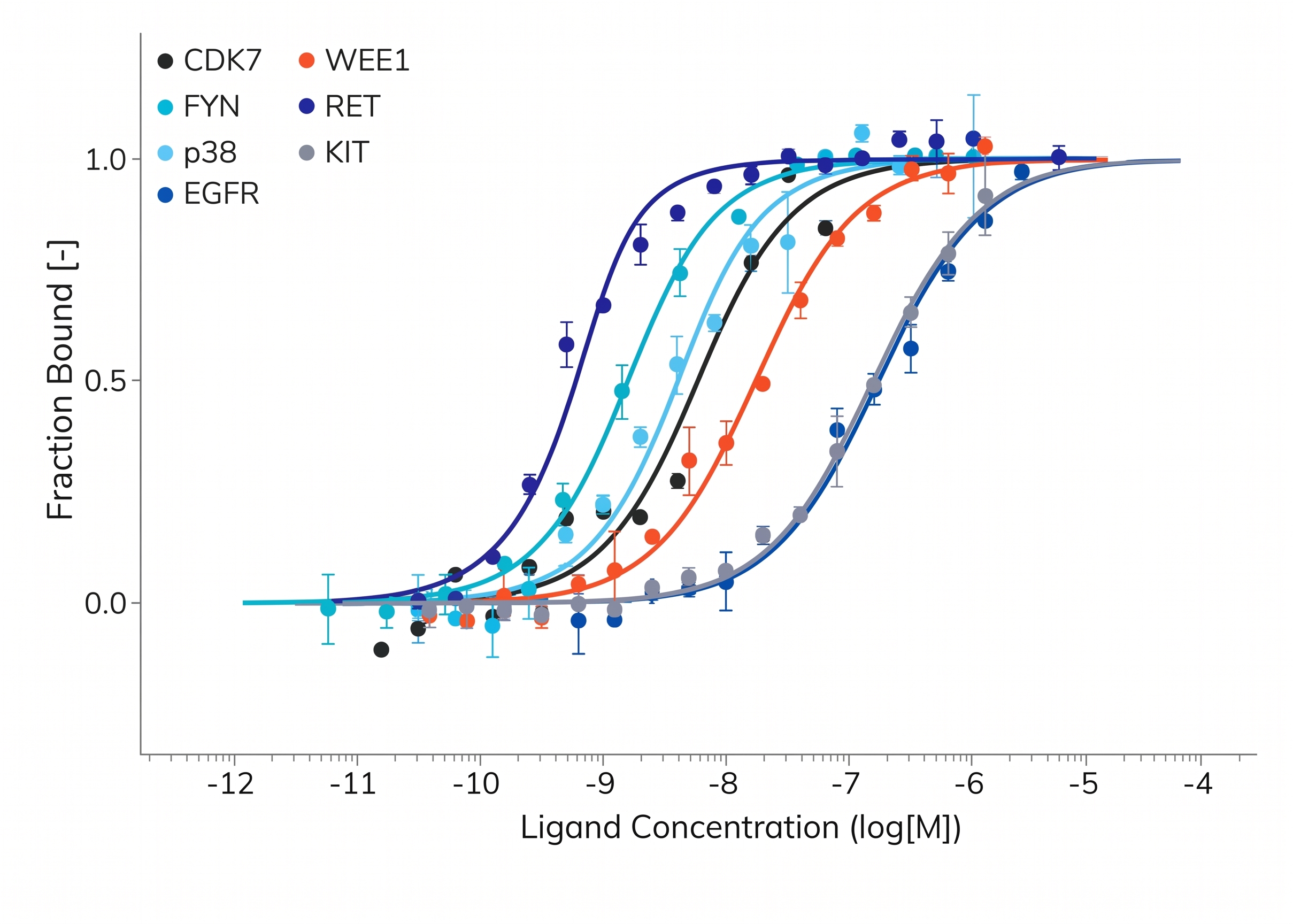
Staurosporine Binding to Selected Kinases (Kd)
- CDC7 (44.7 ± 18.6 nM)
- FYN (10.4 ±1.2 nM)
- EGRF (1671 ± 227 nM)
- WEE1 (150.1 ± 21.1 nM)
- RET (1.18 ± 0.60 nM)
- KIT (1527 ± 138 nM)
- p38 (SB203580, 24.2 ± 5.9 nM)
Explore Solutions for Your Program
Explore solutions by development phase, drug modality, therapeutic area, or integrated discovery needs.
You May Also Be Interested In

Get a Quote
Ready to plan your next study? Share your program needs with our team for a tailored estimate.