
Nucleic Acid Therapeutics Development Services
Advancing Nucleic Acid Therapeutics From Discovery to IND
Nucleic acid therapeutics are transforming the treatment of genetic, metabolic, infectious, and rare diseases by enabling targeted modulation of gene expression or genomic function. These innovative modalities — including mRNA, siRNA, antisense oligonucleotides (ASOs), guide RNAs, and other components — offer new therapeutic opportunities but also introduce unique development challenges that differ from those of conventional small molecules and biologics.
An integrated preclinical development strategy combines discovery biology, in vivo pharmacology, DMPK, bioanalysis, and toxicology assessment to characterize efficacy, biodistribution, pharmacokinetics, target engagement, and safety from early discovery through IND-enabling studies. WuXi Biology and Testing provides these capabilities through a unified preclinical development platform.
In Vitro Studies
In Vivo Studies
IND-Enabling Packages
Why Nucleic Acid Therapeutics Require Specialized Development
Nucleic acid therapeutics differ fundamentally from traditional small molecules and biologics in their mechanisms of action, physicochemical properties, intracellular delivery, pharmacokinetics and biodistribution, safety and off-target effects, and analytical characterization. Factors such as tissue targeting, nuclease stability, delivery vehicles, immune stimulation, and sequence-specific pharmacology require specialized preclinical strategies that integrate biology, DMPK, bioanalysis, and toxicology.
Successful development requires coordinated scientific decision-making across discovery biology, pharmacology, DMPK, bioanalysis, and safety assessment, allowing data generated at each stage to inform the next development decision.
Overcoming DNA/RNA Therapeutic Development Challenges
Challenges
- Selecting biologically relevant targets and validating mechanisms of action
- Optimizing sequence design, stability, and delivery efficiency
- Demonstrating target engagement and functional activity
- Evaluating cellular uptake and intracellular trafficking
Solutions
- Discovery biology and target validation
- Cell-based potency, transfection efficiency, and mechanism-of-action assays
- Functional biomarker analysis
- Molecular characterization and sequence optimization support
Challenges
- Demonstrating tissue distribution and target tissue exposure
- Evaluating pharmacodynamic responses
- Assessing biodistribution and persistence
- Selecting translational animal models
Solutions
- Disease-specific pharmacology models
- Biodistribution and tissue exposure studies
- Integrated biodistribution, PK/PD, target engagement, and efficacy studies.
- Humanized and transgenic animal models
Challenges
- Quantifying intact therapeutic molecules
- Measuring metabolites and catabolites
- Assessing target engagement
- Evaluating biomarkers and immunogenicity
Solutions
- Hybridization-based assays for intact oligonucleotides and nucleic acid therapeutics
- LC-MS/MS
- Ligand binding assays
- Biomarker assays
- Multi-analyte bioanalytical strategies
Challenges
- Identifying off-target effects
- Evaluating immune activation
- Assessing repeat-dose tolerability
Solutions
- Dose-range finding
- Clinical pathology, cytokine profiling, and exploratory safety biomarkers
- Immunotoxicology
- Exploratory toxicology
Challenges
- Regulatory safety evaluation
- Species selection
- Long-term toxicity assessment
Solutions
- GLP toxicology studies
- Safety pharmacology
- Toxicokinetics
- Regulatory reporting
Challenges
- Integrating multidisciplinary datasets
- Supporting regulatory submissions
- Demonstrating safety and efficacy rationale
Solutions
- Integrated preclinical development strategy
- Regulatory documentation
- IND-enabling studies
- Scientific consultation
Related Services
Discovery Biology
Identify and validate therapeutic targets, develop functional assays, and evaluate MOA and efficacy in disease-relevant models.
Learn More
DMPK
Characterize biodistribution, pharmacokinetics, metabolism, and exposure-response relationships for DNA/RNA therapeutics.
Learn More
Bioanalysis
Develop sensitive analytical methods for intact therapeutics, metabolites, biomarkers, and immunogenicity assessment.
Learn More
Safety Assessment
Evaluate toxicology, safety pharmacology, and regulatory readiness to support IND submissions.
Learn More
You May Also Be Interested In
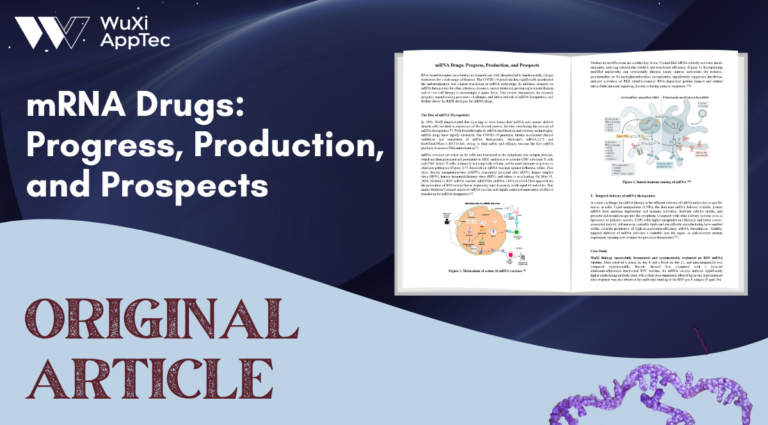

Discuss Your Program with Us
Share your development goals and key challenges with our experts to define the right path forward.
Frequently Asked Questions
Nucleic acid therapeutics are medicines designed to regulate gene expression or modify genetic information to treat disease. This broad class includes messenger RNA (mRNA), small interfering RNA (siRNA), antisense oligonucleotides (ASOs), and other nucleic acid–based therapeutics. These modalities offer highly targeted therapeutic approaches but require specialized preclinical evaluation because of their unique mechanisms of action and delivery strategies.
The specific studies depend on the therapeutic modality, indication, and regulatory strategy, but typically include discovery biology, in vivo pharmacology, DMPK, biodistribution, bioanalysis, safety assessment, and PK/PD modeling. Together, these studies characterize efficacy, pharmacokinetics, target engagement, and safety while supporting candidate selection and IND-enabling development.
Unlike conventional small molecules or proteins, nucleic acid therapeutics often require highly sensitive analytical methods capable of distinguishing intact molecules, metabolites, delivery components, and pharmacodynamic biomarkers. Specialized bioanalytical strategies improve quantitative accuracy and help characterize exposure, biodistribution, and biological activity throughout preclinical development.
Biodistribution studies evaluate where nucleic acid therapeutics and their delivery systems distribute after administration and whether sufficient exposure is achieved in target tissues. These studies help optimize delivery strategies, support pharmacodynamic interpretation, and assess potential off-target exposure before clinical development.
PK/PD modeling quantitatively links drug exposure with pharmacodynamic responses, enabling researchers to understand how dose influences target engagement, biomarker changes, efficacy, and safety. These models support dose optimization, translational research, and model-informed drug development throughout preclinical development.
Target validation combines cell-based functional assays, mechanism-of-action studies, and molecular characterization to confirm that a target is biologically relevant and druggable with a specific therapeutic modality. This process helps de-risk candidate selection before committing to in vivo studies.
Cell-based potency assays, transfection efficiency studies, and mechanism-of-action assays are used to confirm that a nucleic acid therapeutic engages its intended target and produces the expected functional effect. These assays also support comparison across sequence or delivery variants during candidate optimization.
Sequence optimization evaluates stability, specificity, and delivery efficiency to identify candidates with the optimal combination of potency and manufacturability. Iterative testing against functional and biomarker readouts helps select lead candidates before in vivo evaluation.
Discovery biology generates the early potency, mechanism, and functional data used to rank and select lead candidates prior to IND-enabling development. This reduces downstream attrition by ensuring only well-characterized candidates advance into costly in vivo and safety studies.
In vivo efficacy is evaluated using disease-relevant animal models that measure the intended biological or therapeutic outcome, such as target protein expression for mRNA, gene knockdown for siRNA/ASOs, or functional disease markers for other modalities. These studies are paired with in vivo biodistribution assessment to confirm the therapeutic reaches target tissue at sufficient exposure to drive that outcome.
Model selection depends on the modality and target biology, and may include disease-specific, humanized, or transgenic animal models that reflect the intended mechanism of action. Species and model selection are guided by target expression, translatability, and the specific endpoint being measured.
Dose-response is established by testing a range of doses in disease-relevant models and correlating exposure with functional or biomarker outcomes. This data supports dose selection for subsequent PK/PD modeling and IND-enabling studies.
Efficacy endpoints vary by modality: siRNA and ASO efficacy is often measured by degree and durability of target gene knockdown, mRNA efficacy by level and duration of protein expression, and other modalities by functional outcomes such as exon-skipping efficiency. Endpoint selection is tailored to the therapeutic mechanism and disease context.
Integrating PK/PD and efficacy data links drug exposure to biological response, helping researchers understand the relationship between dose, target engagement, and therapeutic outcome. This integrated view supports dose selection, model-informed development, and translational decisions ahead of IND-enabling studies.
Humanized and transgenic models allow researchers to evaluate efficacy in a biological context that more closely reflects human target biology, which is especially important when a therapeutic doesn't cross-react with the corresponding target in standard species. These models help improve the translatability of efficacy findings into clinical development.